

Rotation lived in spreadsheets or memory
Good stock expired unnoticed on the rack
Non-compliant substitutions could slip through at despatch
Audits meant piecing together inconsistent paperwork
FIFO or FEFO enforced automatically, by product, customer or site
Live alerts flag lots approaching their date, before they’re written off
Scanner checks verify batch and date at source, pick and pack
Batch and expiry captured at goods-in, rotation happens on its own
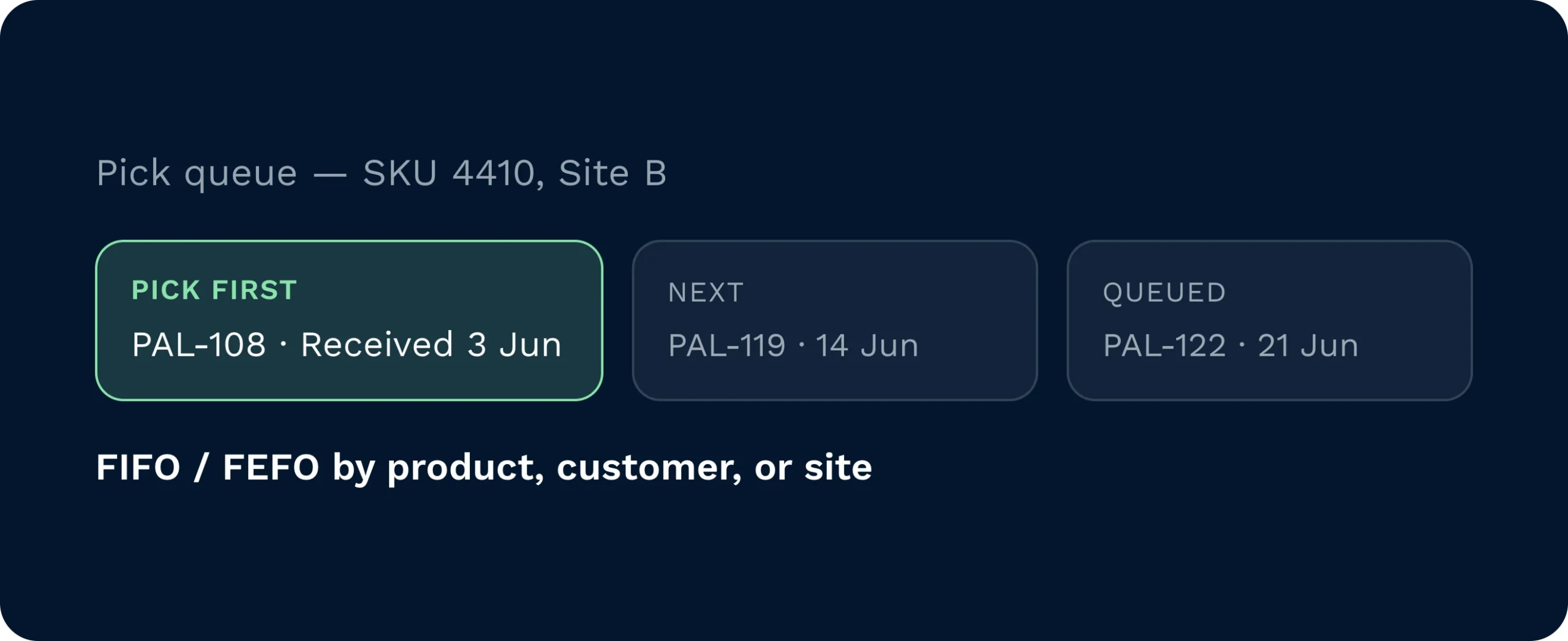
Enforce FIFO or FEFO by product, customer, or site. Picks and replenishments follow the rule every time, replacing guesswork with guided actions that protect margin.
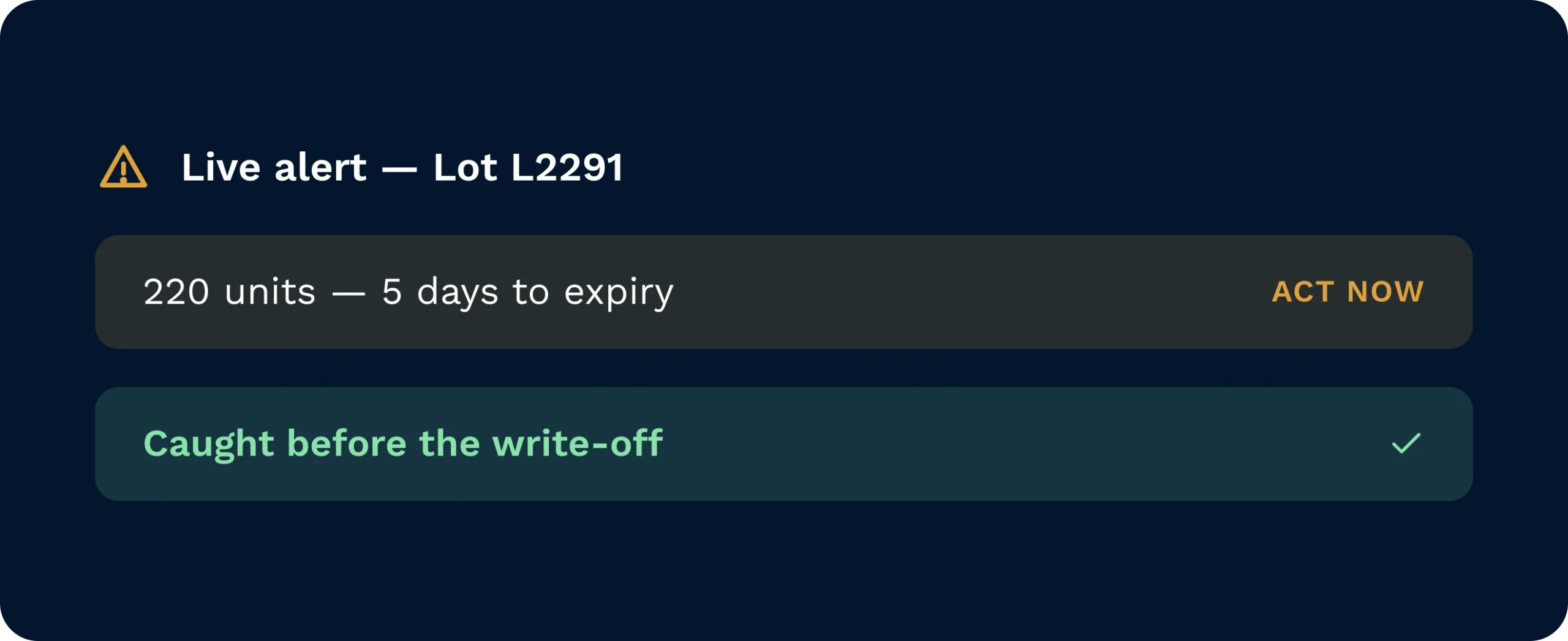
Live alerts highlight lots approaching their date. Exception views show exactly what to act on and where. You intervene early, not after the write-off.
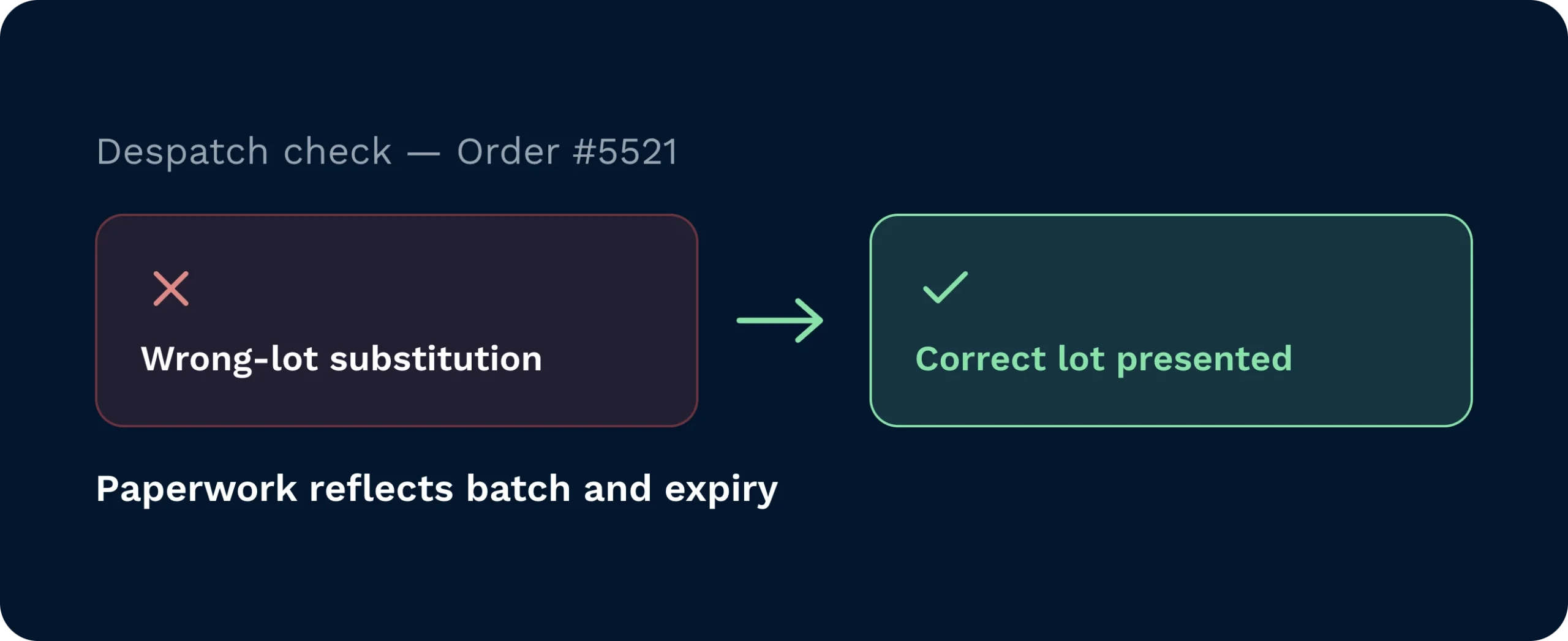
When FEFO applies, Clarus presents the correct lots to pick and prevents non-compliant substitutions. Paperwork reflects batch and expiry, making audits straightforward.
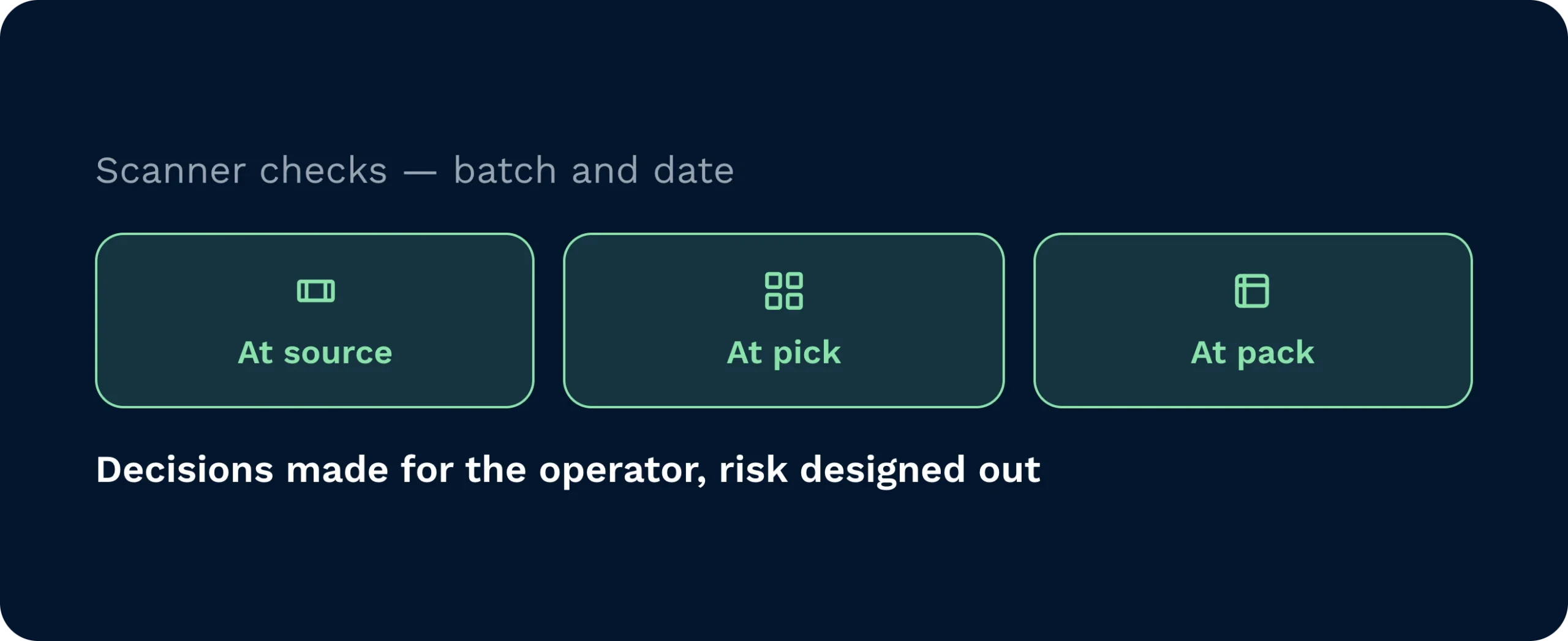
Scanner checks verify batch and date at source, during pick, and at pack. Operators move faster because decisions are made for them. Managers sleep better because risk is designed out.
When rotation lives in spreadsheets or memory, good stock expires on the rack. Clarus brings clear rules and real-time data together so teams always pick the right unit. Batch en expiry are scanned at goederenontvangst. The engine prioritises by receipt date or expiry date, and directs operators accordingly. The result is predictable rotation, cleaner inventory, and fewer uncomfortable calls to customers. Stock Rotation stops being a hassle and starts being automatic.

Set rotation strategy once and roll it out safely across sites. Clarus enforces FIFO/FEFO rules in the flow of work and exposes risks before they hit the P&L. Waste drops and service stabilises without more meetings.

Operators scan, follow prompts, and pick the right lot on the first try. Exceptions surface with clear fixes. Your team stops firefighting and hits cut-offs with fewer errors even when volumes spike.

Trace any shipped lot back to receipt in seconds. Pull reports for inspections. Prove that non-conforming stock was held and that FEFO rules were applied. Compliance becomes routine rather than a scramble.
FIFO prioritises the oldest receipt date. FEFO prioritises the earliest expiry date. Use FIFO for non-perishables where age is a proxy for freshness. Use FEFO for dated goods like food, cosmetics, or pharma where expiry must drive selection. Clarus supports both and lets you set the rule by SKU, customer, or site.
Scanner workflows capture lot and expiry at goods-in, then verify at pick and pack. If an operator scans a lot that isn’t eligible under the Stock Rotation rule, the system blocks it and directs them to the correct pallet or case. This replaces memory with proof and keeps you compliant.
Yes. You can override the global rule for specific accounts, campaigns, or products. For example, a retailer may require a minimum remaining shelf life on despatch. Clarus validates against that threshold and routes non-compliant stock to exceptions or alternative channels.
Use ageing views and alerts to see at-risk lots by site and location. Trigger priority pick tasks, targeted promotions, or cross-dock moves before dates hit. Because the data is live, you act in days rather than discovering problems at stock-take.
It speeds them up. Operators follow directed tasks with clear lot targets and fewer debates at the aisle. Replenishment feeds faces with the right stock first, so pickers don’t search. Exceptions are rare and visible, keeping flow steady at peak.
Every movement carries user, timestamp, location, lot, and expiry. You can trace any shipped product back to receipt, including holds and releases along the way. When auditors or customers ask for evidence, you export it in seconds.
Nog steeds niet zeker? Bekijk vier minuten hoe Clarus omgaat met goederenontvangst, picking en verzending. Je zult zien waarom Onze klanten zeggen steeds ”ja” tegen nieuwe contracten.