

One-size pick method regardless of SKU or order type
Fixed strategy stuck mid-shift when queues or cut-offs changed
Wasted travel from routes and waves that weren’t optimised
Lookalike mix-ups slipped through without extra checks
Best pick method assigned automatically by SKU and order profile
Method switches mid-shift, batch to zone, wave to tote, as queues shift
Travel drops as routes, waves and totes optimise for what’s on deck
Scanner prompts and GS1/EAN checks design errors out at source

Handle eaches, cases, and pallets in one system. Clarus assigns the best method by SKU and order profile, so fast movers get fast paths and bulk lines avoid unnecessary breaks.
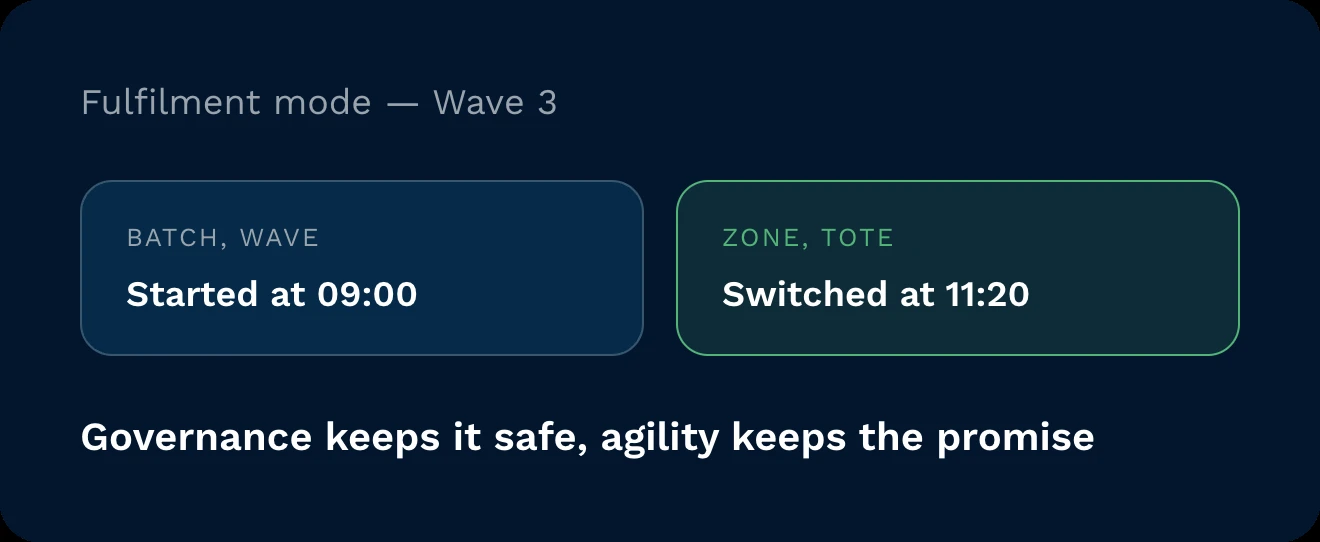
Switch method mid-shift when reality changes (batch to zone, wave to tote) based on current queues and cut-offs. Governance keeps choices safe; agility keeps promises.
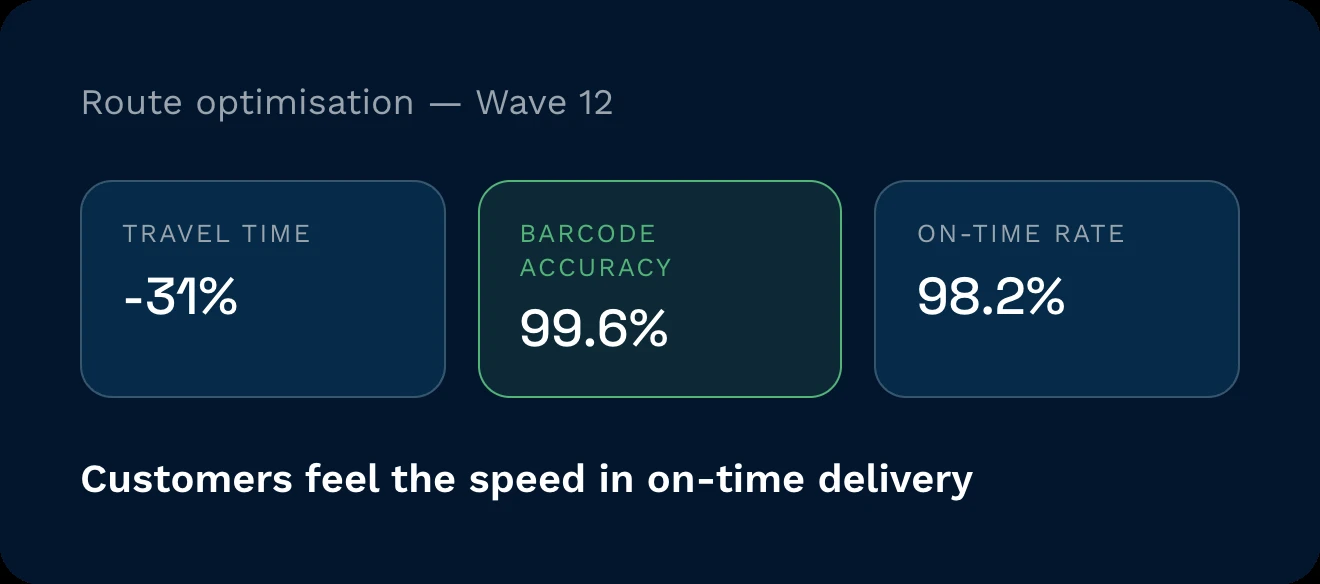
Travel drops when routes, waves, and totes are optimised for what’s on deck. Accuracy rises with barcode checks and task sequencing. Customers feel the speed in on-time performance.
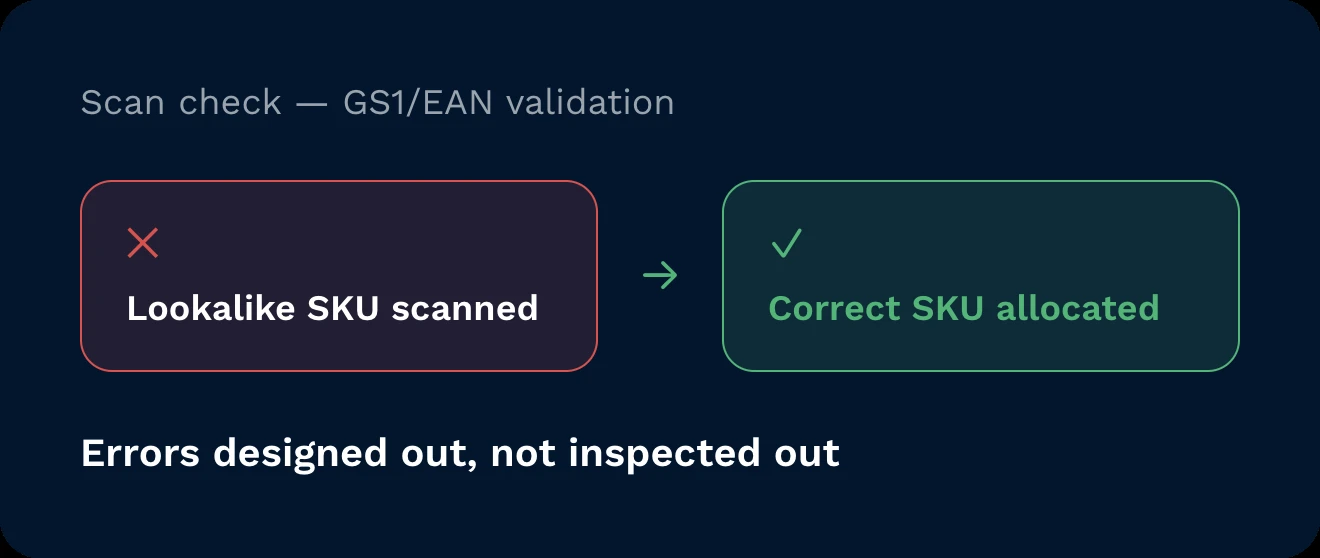
Scanner-led prompts, GS1/EAN validation, and customer-specific allocation rules prevent lookalike mix-ups. Errors are designed out, not inspected out.
Every product moves differently. Some fly in singles. Others ship by the case. Optimised Picking in Clarus WMS interprets order mix, velocity, and layout to select the right strategy on the fly. The result is fewer footsteps, fewer touches, and faster dispatch… without sacrificing accuracy. Your operation adapts to seasonality and promotions automatically, keeping service steady while costs stay predictable.

Set targets, protect SLAs, and let Clarus orchestrate the method mix. You get predictable cost-to-serve and steady service in peak, with decision logs to support every review.

Cleaner task queues. Less aisle congestion. The system chooses the method and route; you keep people productive and resolve exceptions fast with guided actions.

Turn data into speed. Tune thresholds for batch size, zone boundaries, and tote capacity. Simulate changes, then push live when gains are clear.
Rules consider SKU velocity, order similarity, locations, equipment, and cut-off pressure. The engine selects the most efficient method for the current mix and can change mid-shift if conditions change. You keep control with safe overrides.
No. Switches are governed and only occur where it helps. Tasks re-sequence smoothly, handhelds update instantly, and operators receive clear next steps. Flow stays steady; performance rises.
GS1/EAN scans confirm item identity at pick. For customers with identical products but different destinations, allocation rules and barcode mappings ensure the right label and tote every time.
Yes. Clarus handles mixed unit types natively. Full pallets go down the fast path, cases use batch or zone, and eaches run tote or piece picking… all in the same wave if needed.
Update locations and zone boundaries in the platform. Rules and routes adjust automatically. You can test in sandbox waves, then push live with confidence.
Most sites see immediate wins from travel reduction and fewer errors once barcode validation and basic rules are live. Further tuning of batch sizes, tote capacities, and zone design compounds the gains over the next few weeks.
Still on the fence? Spend four minutes watching Clarus handle goods‑in, picking and dispatch. You’ll see why our customers keep saying ”yes” to new contracts.