

In today’s fast-paced supply chain environment, logistics management solutions have become essential for businesses looking to stay competitive. Whether you’re managing fleet operations, handling complex order management, or coordinating international freight forwarding, the right logistics platform can transform how your business runs. This guide explores what logistics management solutions are, why they matter, and how to choose the best fit for your operation.
What Are Logistics Management Solutions?
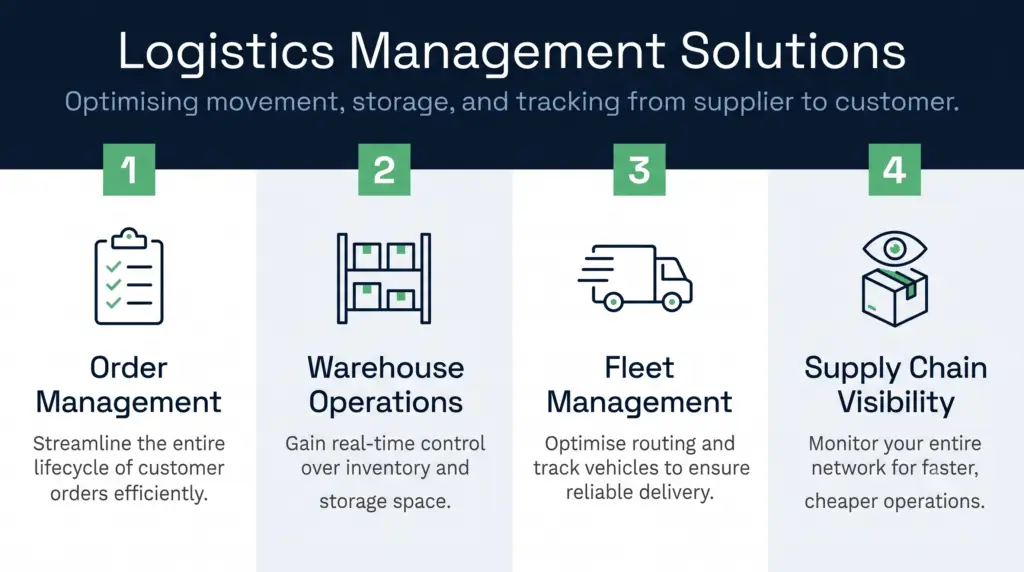
Logistics management solutions are integrated software systems designed to optimise the movement, storage, and tracking of goods from supplier to customer. They cover everything from order management and warehouse operations to fleet management and supply chain visibility. These platforms act as the central nervous system of your business, giving you real-time control over inventory, shipments, and resources.
Den logistics management systems: types, components and benefits available today vary widely, but they all share a common goal: making your operations faster, cheaper, and more reliable. Some solutions focus narrowly on specific functions like warehouse management, whilst others provide comprehensive logistics platforms that integrate multiple processes.
The Core Components of Modern Logistics Management Solutions
To understand what logistics management solutions can do for you, it helps to know the key components that make them work.
Warehouse and Inventory Management
At the heart of most logistics operations sits warehouse management. A good warehouse management system lets you track stock in real time, reduce picking errors, and optimise storage space. Understanding the “What Is a Warehouse Management System?” is crucial because this component directly impacts your operational costs and service speed.
Inventory visibility prevents stockouts and overstocking. It also reduces the costly mistakes that come from manual data entry. Modern systems track stock movements from receiving dock to dispatch, giving you complete confidence in your numbers.
Order Management Integration
Order management systems within logistics management solutions automate the entire order lifecycle. When a customer places an order, the system checks inventory, allocates stock, triggers plockning och packning, and generates shipping labels automatically. This level of automation cuts errors dramatically and speeds up delivery times.
An effective order management system integrates with your e-commerce platform, accounting software, and carrier systems. This integration eliminates manual data entry and synchronises all your business processes in real time.
Fleet Management and Route Optimisation
For businesses that manage their own delivery fleets, fleet management software within your logistics platform is a game-changer. Real-time vehicle tracking, driver management, and automated route optimisation help you cut fuel costs and improve delivery reliability. When you’re running multiple vehicles daily, even small improvements in routing add up to significant savings.
Fleet management software also tracks maintenance schedules, monitors driver behaviour, and ensures compliance with regulations. It transforms an administrative headache into a streamlined operation.
Why Logistics Management Solutions Matter in Today’s Market
The pressure on logistics operations has never been higher. Customer expectations for fast delivery have risen sharply, margins have tightened, and the cost of fuel and labour keeps climbing. Logistics management solutions address these challenges head-on.
Cost Reduction and Efficiency Gains
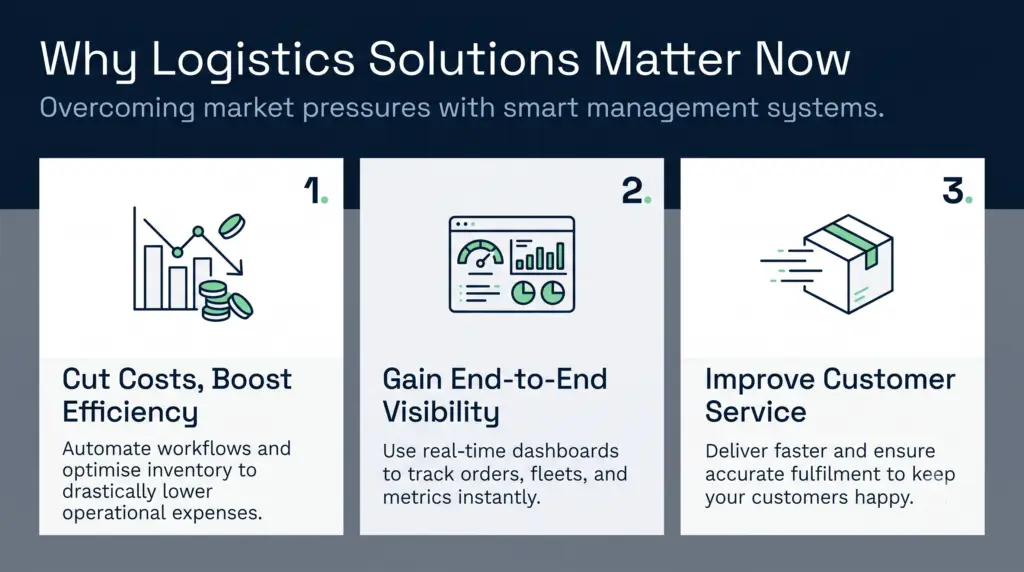
The primary driver for adopting logistics management solutions is cost savings. Better routing cuts fuel spend. Automated warehouse operations reduce labour requirements. Inventory optimisation frees up working capital trapped in excess stock. Many businesses can recover the software investment within 12 months through operational improvements alone.
Beyond direct cost cuts, logistics management solutions improve asset utilisation. Vehicles are loaded more efficiently. Warehouse space is used more intelligently. Picking and packing become faster with system-guided workflows.
Enhanced Visibility and Control
You can’t manage what you can’t see. Logistics management solutions give you end-to-end visibility across your entire operation. Track orders from placement through delivery. Monitor inventory levels across multiple locations. Watch your fleet in real time. This visibility lets you respond quickly to disruptions and customer enquiries.
Real-time dashboards show your key metrics instantly. You’ll know immediately if a warehouse is overwhelmed, a delivery is delayed, or an order has stalled. This early warning system prevents small problems from becoming crises.
Improved Customer Service
When your logistics are working smoothly, your customers notice. Faster delivery times, accurate order fulfilment, and proactive communication about shipment status all lead to happier customers. Logistics management solutions enable all of this by automating communication and ensuring orders move through your system without delays or errors.
Supply Chain Solutions and Integration
Modern supply chain solutions go beyond just managing your warehouse and deliveries. They integrate upstream with your suppliers and downstream with your customers. This integration creates a network where information flows seamlessly, reducing lead times and improving coordination.
When you implement proper Fundamentals of Logistics Management, you’re building a framework that works across your entire supply chain. This includes demand planning, procurement, manufacturing, distribution, and returns management.
Advanced logistics management solutions include supply chain visibility tools that show you what’s happening at every stage, from your suppliers’ warehouses to your customers’ doorsteps. This visibility helps you manage risk, plan better, and respond faster to market changes.
Choosing the Right Logistics Management Solution
Not all logistics management solutions are created equal. The best choice for your business depends on your specific needs, your current technology, and your growth plans.
Key Evaluation Criteria
When evaluating options, look for solutions that integrate well with your existing systems. Your order management system needs to talk to your accounting software, your e-commerce platform, and your carrier systems. Poor integration means manual workarounds and duplicate data entry.
Scalability matters too. You want a solution that grows with your business without expensive overhauls every few years. A system that works for 10,000 orders per month might buckle at 50,000.
Consider the implementation timeline and learning curve. Complex systems take longer to deploy and require more training. If you need to go live quickly, choose solutions known for rapid implementation. Read independent reviews of Logistics Software – Price Comparison & Reviews to see how long deployments typically take.
Assessing Your Specific Needs
Start by mapping your current processes and pain points. Do you struggle with inventory accuracy? That points toward warehouse management as your priority. Are your delivery costs too high? Fleet management features matter most. Is order processing a bottleneck? Order management automation is critical.
Document your current volumes and peak periods. Understand where your staff spend the most time and where errors happen most often. This analysis guides your solution selection toward the areas that will deliver the highest return on investment.
For businesses providing logistics services to other companies (3PLs), specialist solutions are essential. Understanding what defines a 3PL Management System helps ensure your chosen solution supports multi-customer operations, billing by customer, and the reporting customers expect.
Comparing Popular Logistics Management Solutions
The market offers many logistics management solutions, each with different strengths. To help you narrow your choice, look at how vendors approach core functionality.
When researching options, check out independent guides like 7 Top Logistics Management Software Solutions for 2025 och Full-list: Best Logistics Management Software to compare features, pricing, and user experiences.
Consider vendor stability and the strength of their product roadmap. You’re investing in a system you’ll use for years. A vendor committed to ongoing innovation in fleet management software, order management systems, and supply chain solutions will serve you better long-term than one with a stagnant product.
Evaluate industry-specific solutions alongside general platforms. If you’re in a specialised vertical like food distribution or pharmaceuticals, look for solutions built for your sector that already handle your compliance requirements. Check out Logistics Management | Supply chain software for examples of enterprise-grade solutions with deep industry expertise.
Implementation and Ongoing Success
Choosing the right solution is just the beginning. Implementation matters enormously. A well-executed rollout can be completed in weeks; a poorly managed one can take months and still leave staff frustrated.
Planning Your Implementation
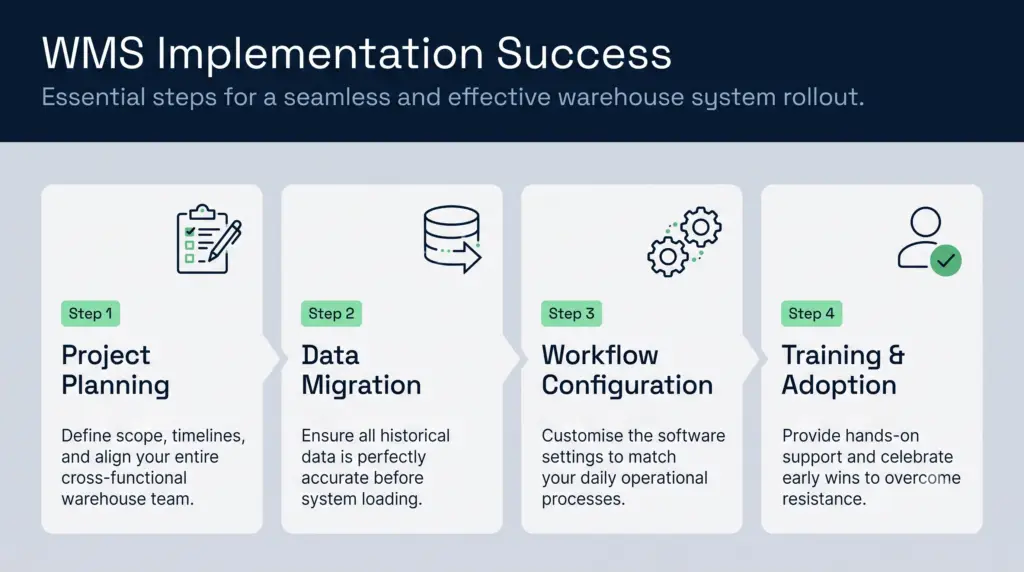
Start with a clear project plan that defines scope, timelines, and resource allocation. You’ll need to involve people from every function: warehouse staff, drivers, customer service, accounting. Their buy-in is crucial for success.
Plan your data migration carefully. Ensure historical data is accurate before loading it into the new system. Poor data going in means poor insights coming out, undermining the entire value of the system.
Take time to configure the system to match your workflow. Don’t let the software dictate how you work; make it work the way your business operates. This customisation is time-consuming but essential for user adoption.
Training and Change Management
Your team needs proper training on the new system. Too many implementations fail not because the software is bad but because staff never learned how to use it effectively. Budget time and resources for hands-on training, documentation, and ongoing support.
Recognise that change is uncomfortable for many people. Communicate clearly why the system is changing, how it will improve their work, and what support is available. Celebrate early wins. When staff see the system working and their jobs getting easier, resistance melts away.
How Clarus Can Help
If your operation needs to scale without adding administrative bloat, Clarus delivers an AI-powered, cloud-native solution designed specifically for modern 3PLs and fulfilment centres.
Intelligent Automation & Complete Visibility Clarus moves beyond basic tracking by using actionable AI to automate order processing, routing, and dock scheduling. With scan-led workflows from goods-in to dispatch, you get real-time, pinpoint inventory accuracy that practically eliminates costly manual errors and mis-picks.
Simplified Multi-Client Management Managing multiple customers is effortless. Clarus isolates configurations for each client, allowing you to seamlessly set unique pick-and-pack rules, reporting structures, and automated billing for storage and handling fees.
Rapid, Seamless Integration Upgrading shouldn’t stall your business. Clarus deploys quickly, features an intuitive interface, and connects seamlessly with over 200 e-commerce, accounting, and carrier platforms right out of the box.