Evidence/Image Capture

See it. Capture it. Settle it.

Clarus WMS warehouse image capture records visual proof at goods-in, put-away, picking and dispatch. Right where work happens. It eliminates disputes, speeds up investigations and gives teams the confidence to move without second-guessing.

Faster checks.

Fewer disputes.

Paperless proof.

The old way vs Clarus.

Spreadsheets got you here. They won't get you further.

Before

Damaged deliveries and missing packaging caused doubt and delays

Teams hunted through phones and inboxes for evidence after the fact

No centralised, timestamped record of goods condition at receipt

Operatives juggled multiple apps or clipboards during daily tasks

After

Images capture in two taps, built into the existing task flow

Every image links automatically to the task, user, location and time

Dispute resolution times drop by 30 to 50% once proof is captured at source

Supporting evidence surfaces in seconds for audits or customer claims

How it works.

Start seeing results straight away.

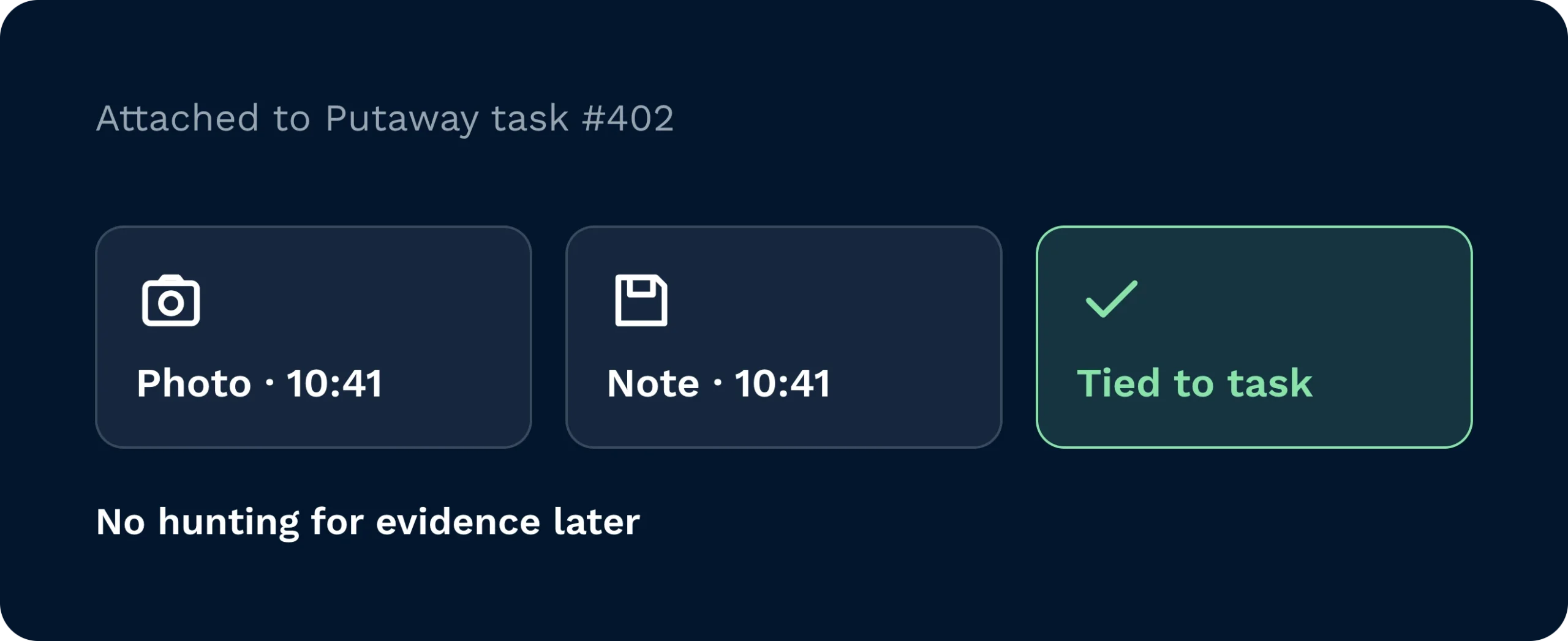
A digital interface shows photographic evidence and notes directly tied to a specific warehouse putaway task. Linking photos to tasks with timestamps prevents lost documentation and improves accountability.

Real-time, task-based attachments.

Capture images and notes the moment work happens on receipt, putaway, pick and dispatch. Files are time-stamped and tied to the exact task, storage unit or order, so there’s no hunting for evidence later. Customers typically see dispute resolution times drop by 30–50% once proof is captured at source.

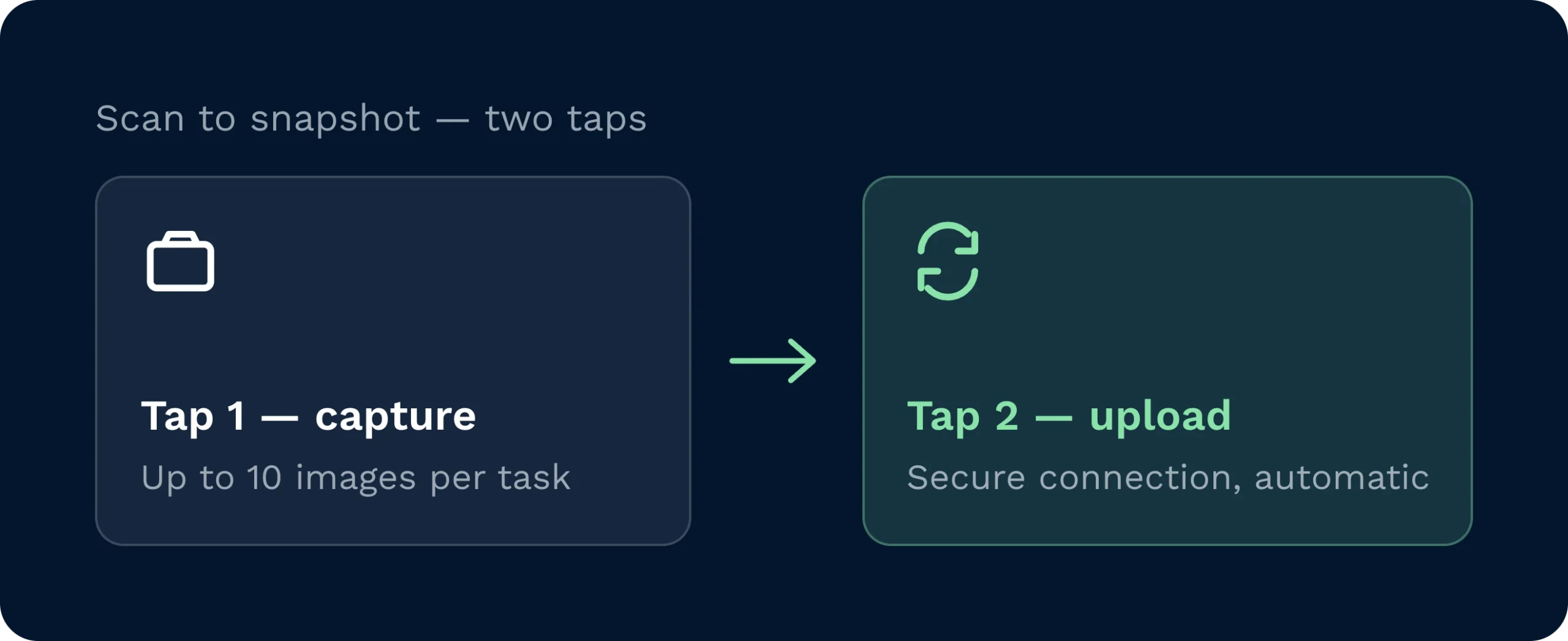
A mobile interface outlines a quick two-step process for warehouse staff to capture and upload task photos. The system supports secure, automatic uploads to document daily workflows efficiently.

HHD-first and simple to use.

From scan to snapshot in two taps. The HHD flow guides operatives step by step, with support for up to 10 images per task (configurable) and automatic upload over secure connections. Teams get it straight away, so adoption is fast and training time stays low.

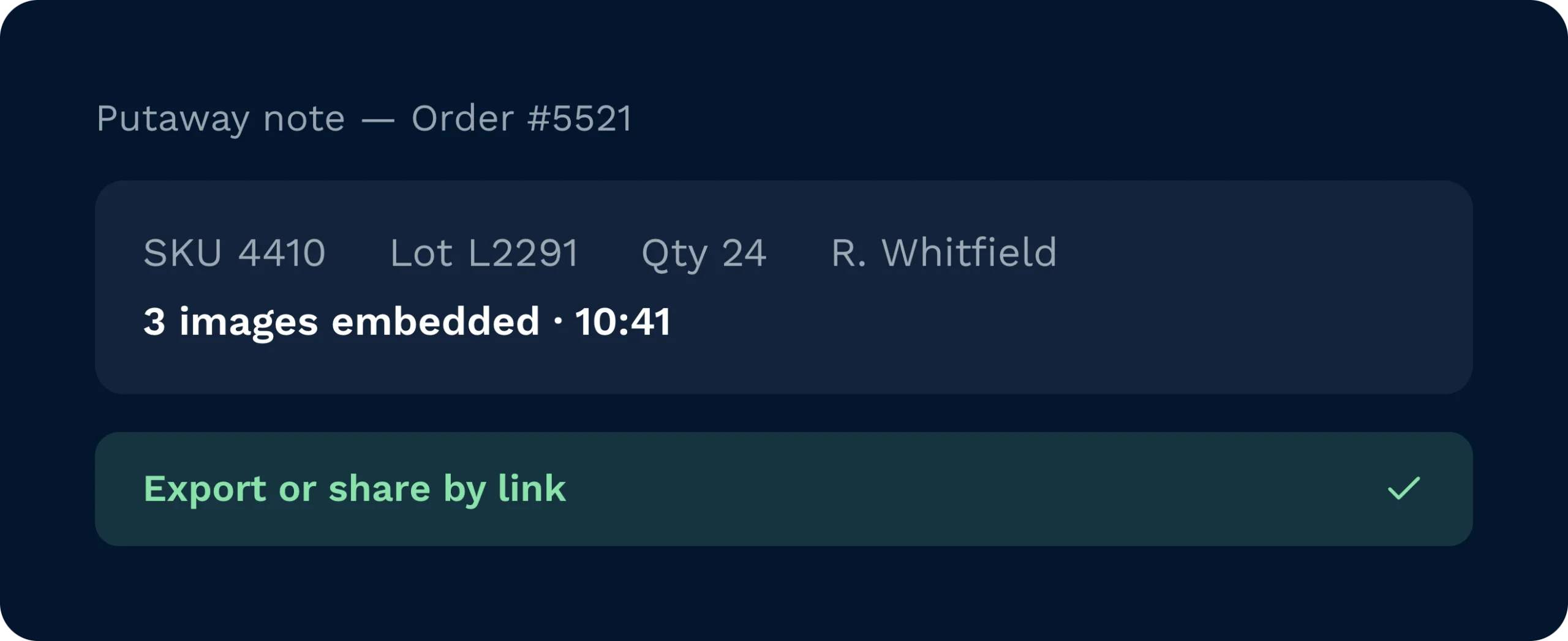
A digital putaway note shows stock details with multiple embedded images. Warehouse staff can easily export or share this photographic proof via a secure link to resolve disputes.

Shareable, searchable proof.

Need to show what arrived and how it was stored? Generate a putaway note or receipt report with embedded images and key metadata (sku, lot, quantity, user, time). Export as a file to send to customers, or provide a shareable link with controlled access.

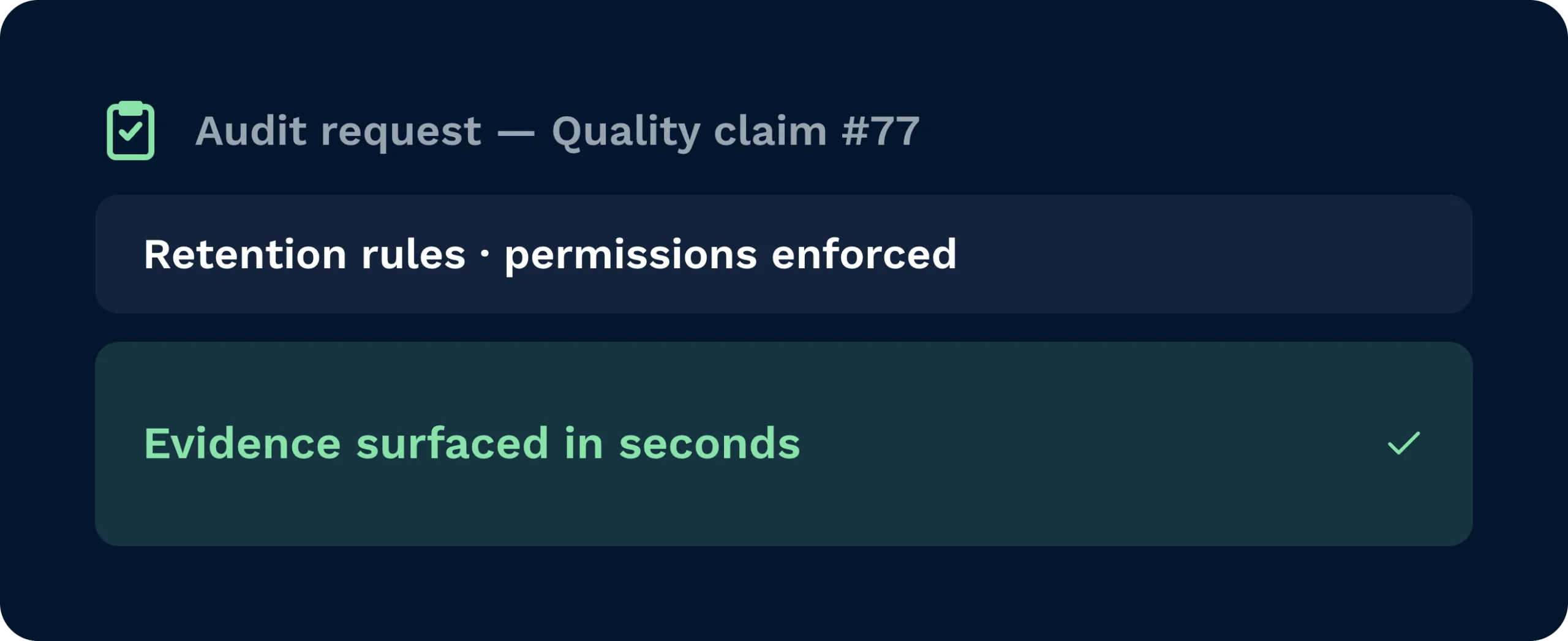
A warehouse management system screen displays an audit request with enforced retention rules. Digital evidence can be surfaced in seconds to support quality claims and compliance.

Compliance and audit confidence.

Create a clear, consistent record for quality checks and claims. Evidence is centralised with retention rules, user permissions and full traceability. During audits, you can surface supporting images and notes in seconds, helping you pass with confidence and minimise write-offs.

Clarity starts with better control. Work smarter.

Damaged deliveries or missing packaging cause delays and doubt. Image capture removes the guesswork by giving you instant, timestamped proof tied to the exact task, user and location. No more digging through phones or inboxes… just clear evidence when you need it.

How this feature helps your team.

Warehouse operative photographs a pallet during goods-in for warehouse image capture evidence.

Warehouse Operatives

Daily tasks are faster and simpler, reducing errors and guiding operatives step by step. The HHD workflow keeps everything in one flow (scan, check, capture) so operatives don’t juggle apps or clipboards.

Warehouse manager reviews proof of receipt photos on a tablet beside the loading bay.

Warehouse Managers

See which receipts have attachments, review damages at a glance, and produce customer-ready reports in seconds. Exceptions are easier to manage when the proof is already there.

Operations director presents wms damage evidence trends with sample warehouse images on screen.

Operations Directors

With reliable evidence built into the process, you reduce risk, protect margin, and strengthen customer trust. Clear trend data across sites supports continuous improvement and commercial negotiations.

QUESTIONS BUYERS ACTUALLY ASK.

Frequently asked questions

How does image capture fit into daily warehouse tasks?

Clarus weaves photos into existing tasks so operatives don’t break stride. During receipt, putaway, picking or dispatch, they open the task and capture images (labels, pallet faces, damage areas) then confirm. The system links those images to the correct reference automatically. Managers can view attachments from the receipt or task screens, browse with a carousel, and download images for claims or customer emails. It’s designed to be quick, obvious and reliable, without creating new steps or side processes.

Will this slow down goods-in during busy periods?

No.. speed is the point. The capture component loads quickly, remembers existing attachments, and keeps the interaction to a few clear taps. On handhelds, the camera opens directly; on desktop, users can upload files if a camera isn’t available. By capturing proof of receipt photos at the point of work, you avoid long investigations later and keep the bay moving. In most operations, a few seconds per pallet pays back minutes (or hours) when disputes arise.

Can we use the images for carrier or supplier claims?

Yes. That’s one of the main benefits. Images provide the WMS damage evidence carriers and suppliers expect: close-ups of affected areas, label shots for identification, and wider context frames showing the pallet on arrival. Because photos are stored against the relevant task or receipt, your team can retrieve and share them in moments. Many customers also include them in putaway notes or outbound reports to prevent disagreements further downstream.

What about storage, retention and access control?

Images are stored with the same governance as other operational attachments. You define retention periods and access permissions by role, ensuring sensitive information stays in the right hands. Exports are traceable, with downloads available for audited communication to customers. If your organisation needs specific retention rules, we can support policy configuration to match them.

Can the system capture other file types, like PDFs?

Today, the focus is streamlined warehouse image capture for speed on the floor. The current UI prioritises photos because they’re the fastest way to record condition and context. We do support attachments from desktop upload, and multi-type capture (e.g., PDFs) is on the roadmap alongside UI enhancements like thumbnail film strips and duplicate deletion. If you already have a requirement, tell us and we’ll align your rollout plan accordingly.

How do customers see the images?

You decide. Managers can download selected photos and share them in a customer email, or include them automatically in documents such as putaway notes or shipment confirmations. The goal is transparency: give customers immediate proof of receipt photos when something looks off, and a clean record when everything is fine. It’s a simple way to reduce back-and-forth and show you’re in control.

 

See Clarus in action in under 10 mins.

Still on the fence? Spend four minutes watching Clarus handle goods‑in, picking and dispatch. You’ll see why our customers keep saying ”yes” to new contracts.

Complete the Form to Get Instant Access.

Explore latest features.
We’re always adding new tools to make warehouse management simpler and smarter. From improved reporting to enhanced mobile workflows, our latest updates are built to help you move faster, reduce errors, and stay ahead.
Demand replenishment

Demand Replenishment

Replenishment that selects the exact right stock
Activity types icon

Activity Types for HHD

Every operator sees exactly the right tasks
Automated billing icon

Charging and Invoicing

Billing that reflects your contracts automatically
Icon of a pallet with a power plug representing an api first wms

API-first Architecture

API-first WMS Architecture for scalable warehouse operations.