

Orders worked in whatever sequence they landed, not what mattered most
Special-handling rules relied on someone remembering them
Different order types needed separate manual processes
Carrier choice came down to guesswork at the bench
Orders auto-sequenced by cut-off, SLA, tier, value or backlog age
Flag a SKU once and handling rules enforce themselves
One engine allocates and validates single-line to pallet orders alike
Carrier rules pick the service, manifests and labels generate on time
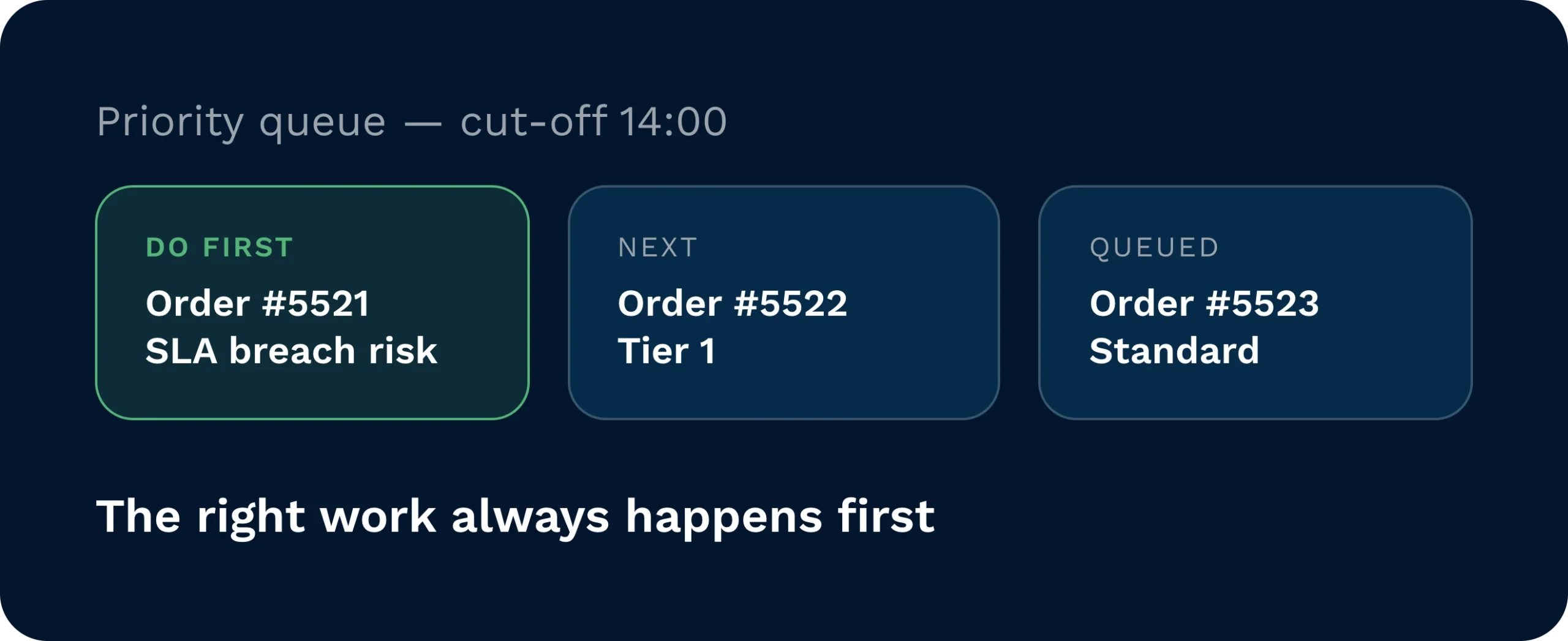
Sequence by cut-off, SLA, customer tier, value, delivery method, or backlog age. Clarus updates priorities in real time as conditions change, so the right work always happens first.
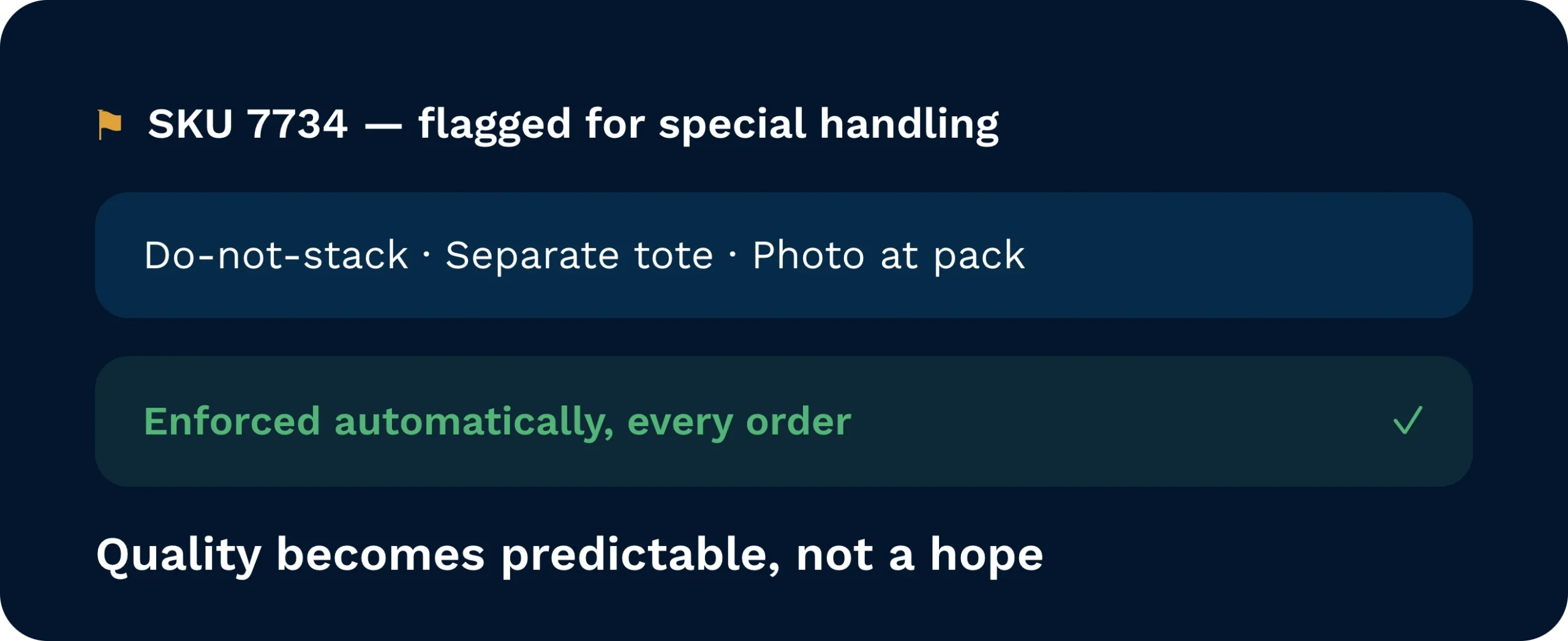
Flag SKUs once and let the system enforce handling… separate totes, “do not stack”, weight/height limits, extra scans at pack, or photo evidence where needed. Quality becomes predictable, not a hope.
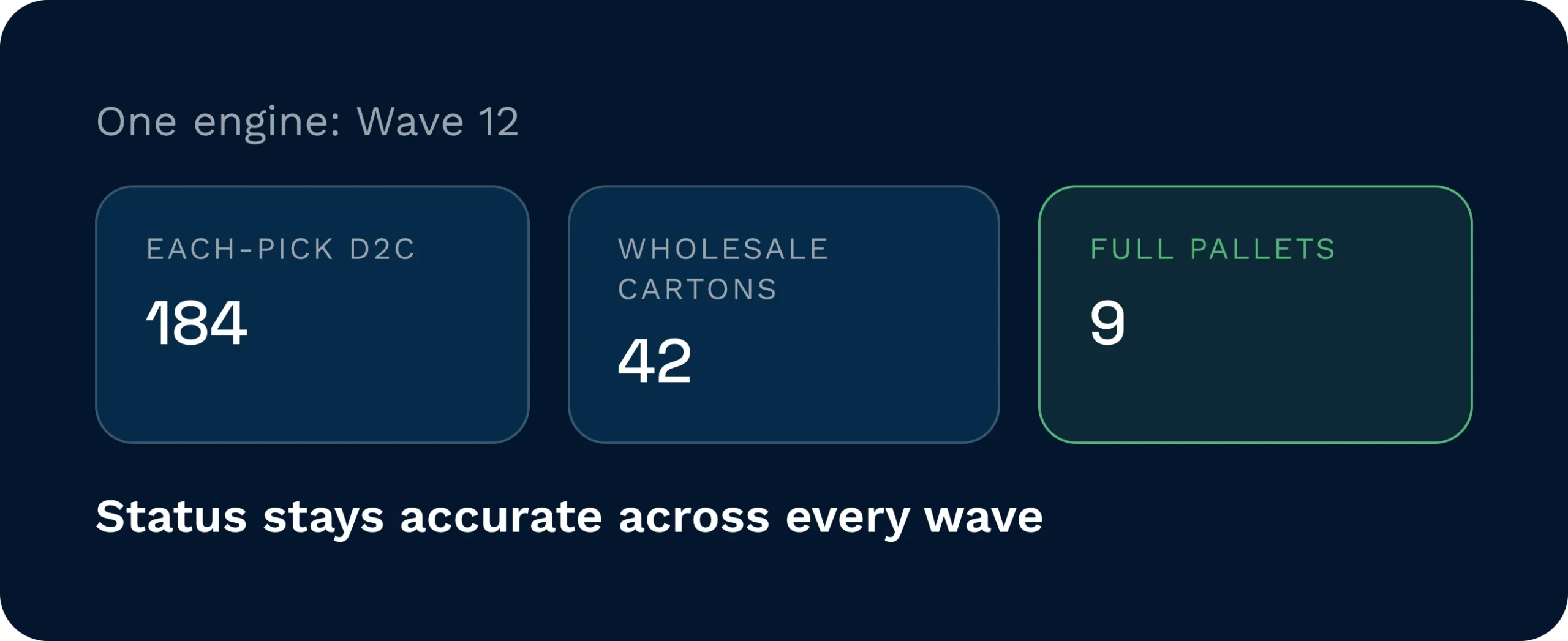
From each-pick D2C to wholesale cartons and pallets, the same engine allocates tasks, validates barcodes, and keeps status accurate across waves, zones, and benches.
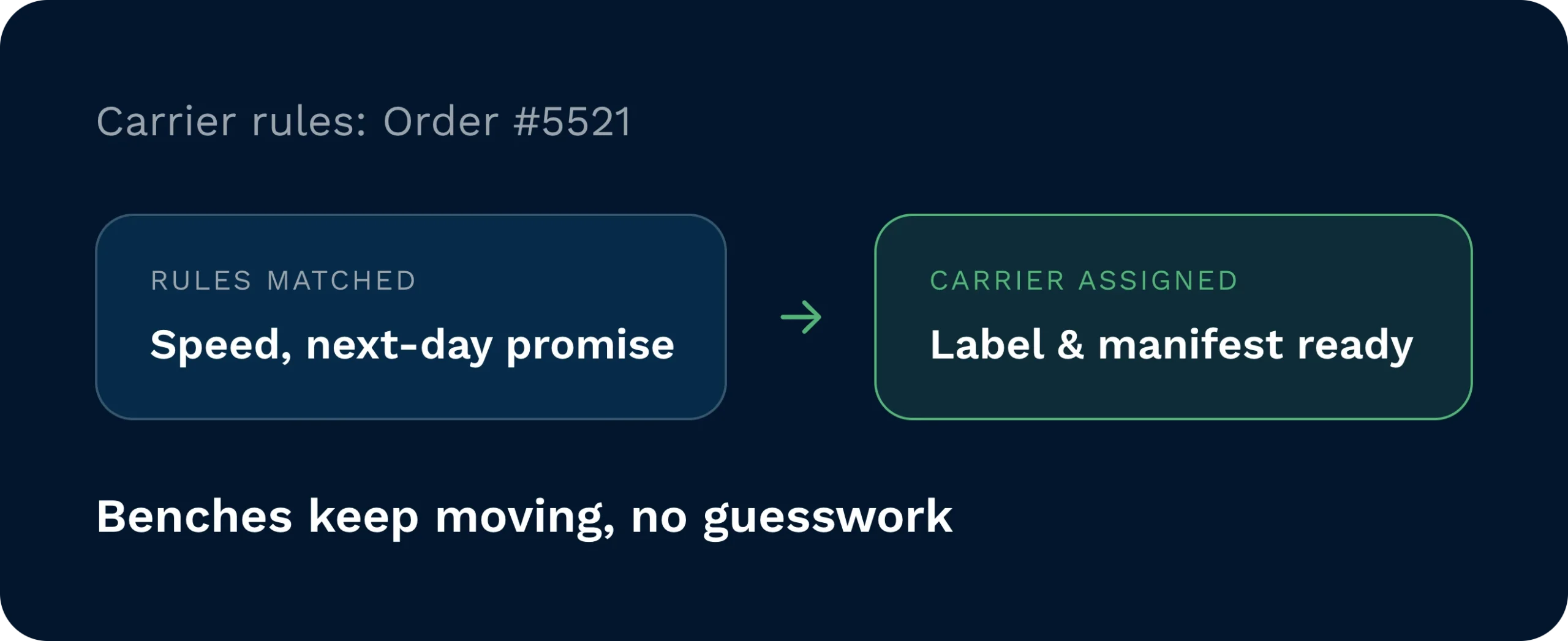
Select services by rules… cost, speed, promise date, destination, or customer preference. Manifests, labels, and tracking references generate at the right time and place to keep benches moving.
Promos surge. Cut-offs loom. Requirements vary by customer. Order Management in Clarus turns all that noise into a clear plan. Orders are ranked by your rules. Fragile, hazmat, and value controls apply automatically. Picking flows by the best method. Packing is guided and verified. Labels print. Carriers are chosen against cost and service. Your team focuses on flow, not firefighting.

Set the rulebook. Clarus applies it in the flow of work so the right orders move first, fragile handling is enforced, and cut-offs hold… even on peak days.

Tasks arrive in the right order. Exceptions are clear and actionable. Teams move from queue to queue without radio chatter, keeping throughput high and errors low.

Answer confidently. See release, pick, pack, and despatch milestones plus tracking in one place. Calls get shorter. Trust climbs.
A rules engine scores orders by cut-off, SLA, age, value, customer tier, and channel. As conditions change (late inbound, carrier cut-off shifts) the scores update and queues re-sequence automatically, keeping work aligned to what matters most.
Flag SKUs with handling attributes (fragile, do-not-stack, temperature-sensitive). Clarus enforces separate totes, pack checks, filler prompts, and “ship alone” where needed. Optional photo capture at pack provides proof for claims.
Yes. Clarus can run tote for singles, batch for common lines, and zone for large orders simultaneously. The system assigns the most efficient method per order/SKU and keeps status coherent across flows.
You can configure your chosen carriers/services and apply routing rules for cost and speed. Labels, manifests, and tracking references are produced in the right sequence at despatch. (Specific integrations depend on your setup.)
Exceptions surface with context and a next action. Short pick, substitution rule, reprint label, re-route service. Supervisors get an override path where permitted, so queues keep moving.
No. Start with guidance and safe overrides. As confidence grows, tighten rules. Most sites see immediate gains from prioritisation and barcode checks, with further improvements as method and carrier rules are tuned.
Still on the fence? Spend four minutes watching Clarus handle goods‑in, picking and dispatch. You’ll see why our customers keep saying ”yes” to new contracts.