
Hazardous Goods Logic

Safety first. Stress last.

Bring hazardous goods controls into one place. Look up risks in seconds, enforce storage and handling rules, and generate concise reports that keep everyone aligned and compliant.

Live hazard data.

Safer decisions.

Fast, clear reports.

The old way vs Clarus.

Spreadsheets got you here. They won't get you further.

Before

UN numbers and PPE requirements lived in binders, not in the workflow

Hazard reports meant manually collating data by class and location

Incompatible items could end up stored side by side

Training relied on tribal knowledge, so standards drifted

After

UN number, class, packing group and PPE surface in everyday workflows

Filterable reports by class, risk, location and customer, audit-ready

Storage limits and segregation rules block incompatible placements

Role-based prompts and on-gun guidance keep everyone to the same standard
How it works.

Start seeing results straight away.

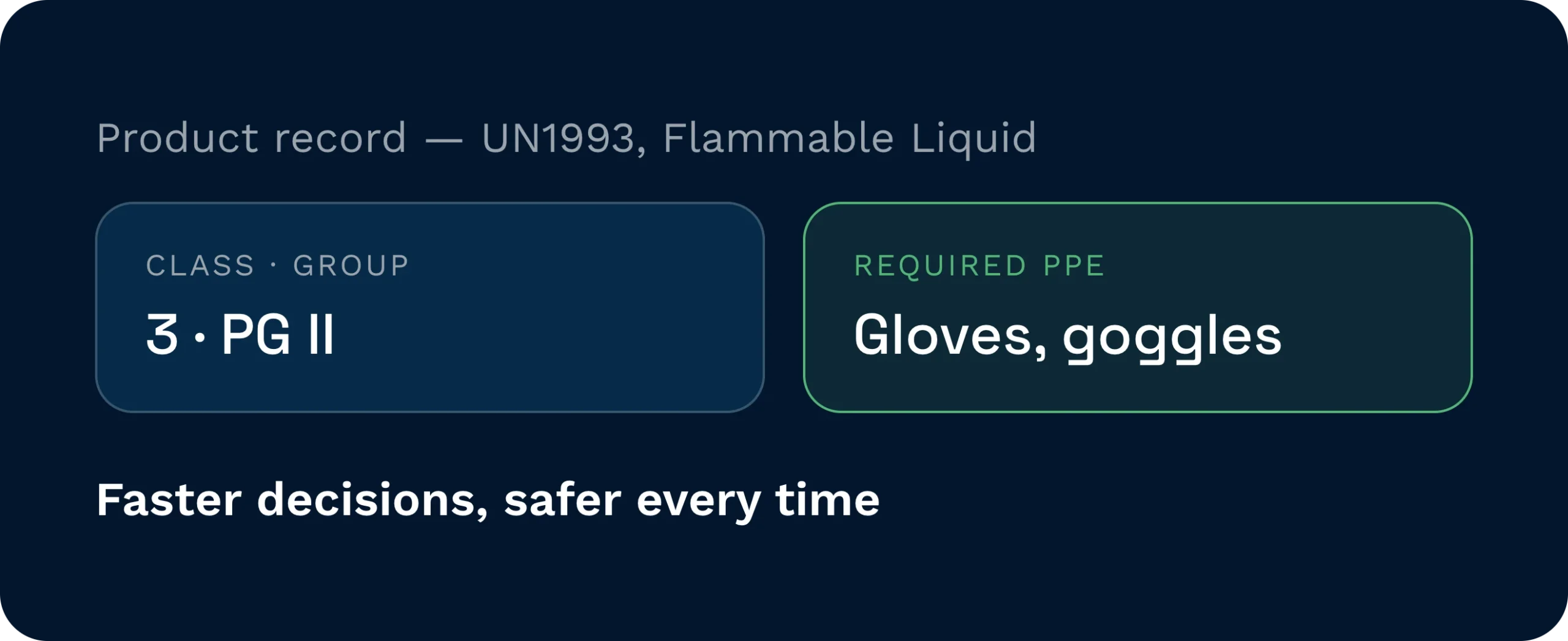
Product record for un1993 flammable liquid showing class 3, packing group ii, with required ppe of gloves and goggles.

Safety and compliance.

Keep essential details at your fingertips. See UN number, class, packing group, incompatibilities, and required PPE as part of everyday workflows. Decisions are faster and safer.

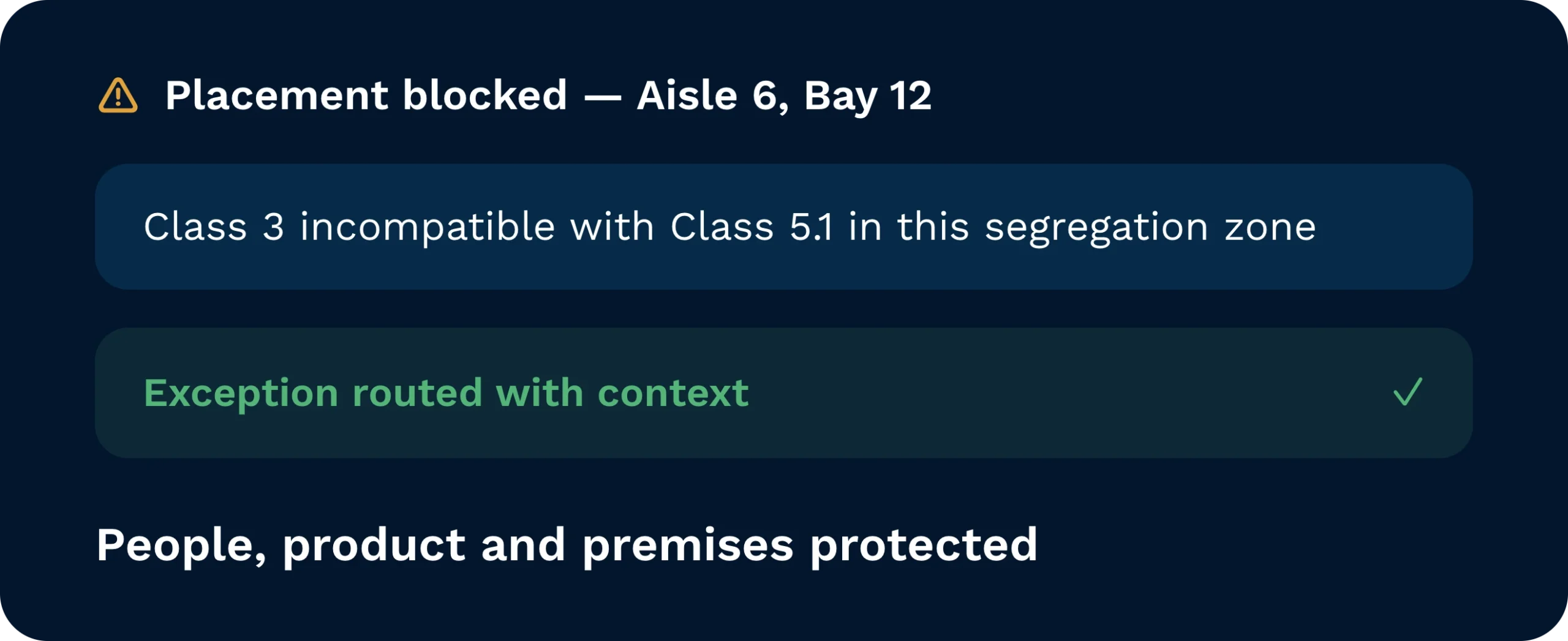
Alert showing a blocked placement in aisle 6, bay 12, because a class 3 item is incompatible with class 5. 1 in that segregation zone, with the exception routed with context.

Reporting by hazardous categories.

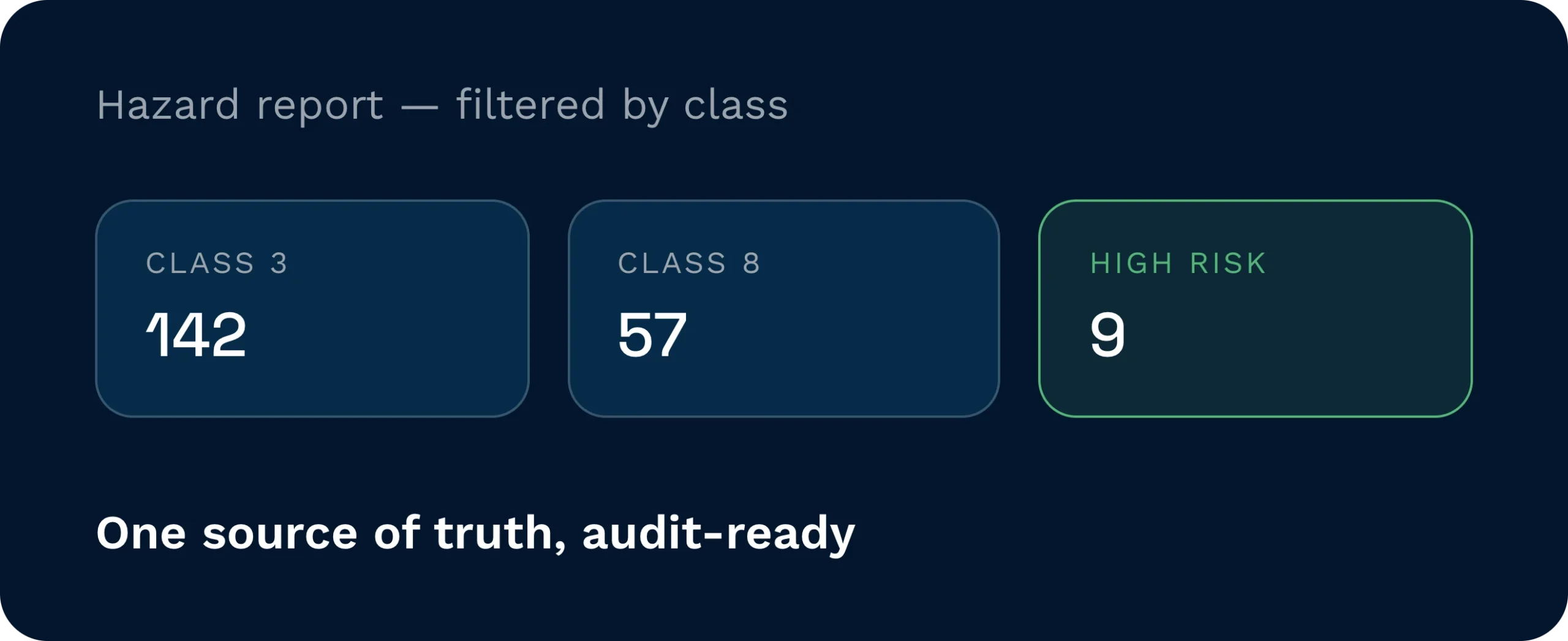
Create clear, filterable reports by class, risk level, location, and customer. Share a single source of truth with stakeholders and be audit-ready without manual collation.
Hazard report filtered by class showing 142 class 3 items, 57 class 8 items, and 9 flagged as high risk.

Prioritising safety at every move.

Encode storage limits, segregation, and aisle rules. The system blocks incompatible placements and routes exceptions with context, protecting people, product, and premises.
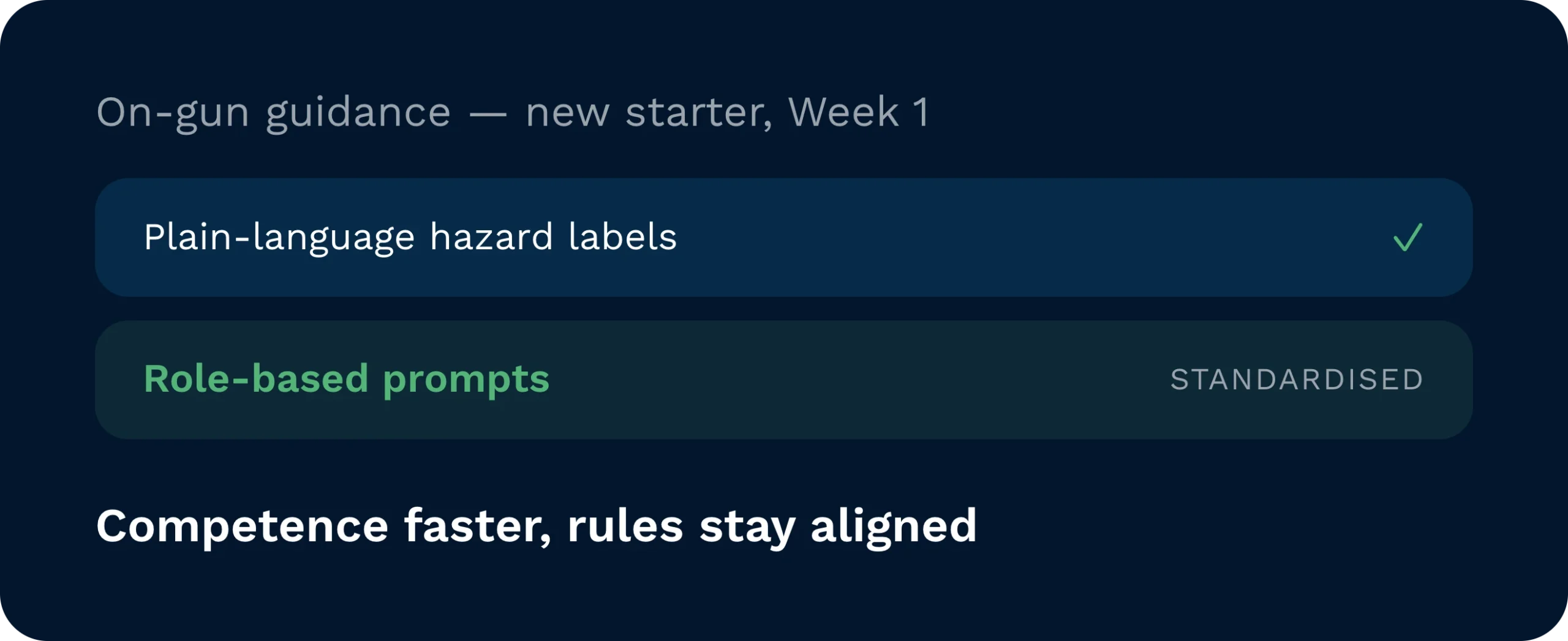
On-gun guidance for a new starter's first week showing plain-language hazard labels and standardised role-based prompts.

Training made simple and consistent.

Role-based prompts, plain-language labels, and on-gun guidance standardise how hazardous goods are handled. New starters reach competence faster, and experienced staff stay aligned to the same rules (fewer slips, safer shifts).

Put safe, legal handling on autopilot. Work smarter.

When critical hazard information sits in binders or inboxes, mistakes happen. Clarus WMS surfaces the right data at the right moment. Safety becomes the default path, not an extra task.

How this feature helps your team.

Head of operations reviews hazard classes and segregation alerts to protect throughput.

Head of Operations

See the risk picture at a glance. Direct resources and resolve issues early with evidence-backed decisions.

Warehouse manager follows handheld prompts for compliant hazmat storage.

Warehouse Manager

Putaway and moves are guided. Incompatibilities are blocked. Safer handling becomes automatic.

Compliance lead exports a hazardous goods report by class, risk level, and site.

Compliance & HSE

Produce concise reports in minutes. Share what regulators and clients need with a defensible audit trail behind every line.

QUESTIONS BUYERS ACTUALLY ASK.

Frequently asked questions

How are hazard classes and rules maintained?

Hazard data sits on the product master. Updates are controlled by role-based permissions, ensuring consistency across sites while keeping edits accountable.

Can the system block incompatible storage automatically?

Yes. Segregation and storage rules are enforced at putaway and move. If a placement breaks a rule, the system rejects it and proposes safe alternatives.

What information do operators see on handhelds?

Key details only. Class, packing group, PPE prompts, and any special handling or temperature notes. Enough to act safely without slowing the shift.

How does reporting support audits and customers?

Generate reports by class, risk, location, and customer with timestamps and user trails. Export to CSV or Excel so stakeholders get the exact slice they need.

Will this slow operations at the aisle?

No. Prompts are concise and built into normal tasks. Blocking unsafe actions prevents rework and incidents that cause bigger delays later.

Can we tailor rules by site or client?

Yes. You can inherit standards globally and add site or customer-specific constraints where required. Governance keeps configurations consistent and auditable.

See Clarus in action in under 10 mins.

Still on the fence? Spend four minutes watching Clarus handle goods‑in, picking and dispatch. You’ll see why our customers keep saying ”yes” to new contracts.

Complete the Form to Get Instant Access.

Explore latest features.
We’re always adding new tools to make warehouse management simpler and smarter. From improved reporting to enhanced mobile workflows, our latest updates are built to help you move faster, reduce errors, and stay ahead.
Demand replenishment

Demand Replenishment

Replenishment that selects the exact right stock
Activity types icon

Activity Types for HHD

Every operator sees exactly the right tasks
Automated billing icon

Charging and Invoicing

Billing that reflects your contracts automatically
Icon of a pallet with a power plug representing an api first wms

API-first Architecture

API-first WMS Architecture for scalable warehouse operations.