

Batch control lived in spreadsheets, and risk crept in
Recalls meant hours spent hunting for affected batches
No easy way to trace a batch’s full journey after despatch
Non-compliant lots could still get picked and shipped
Affected batches identified in seconds, filtered by site or customer
Full batch history on demand, from goods-in to despatch
Shelf-life and hazard rules block out-of-policy picks at scan
Ageing alerts surface at-risk stock before it’s written off
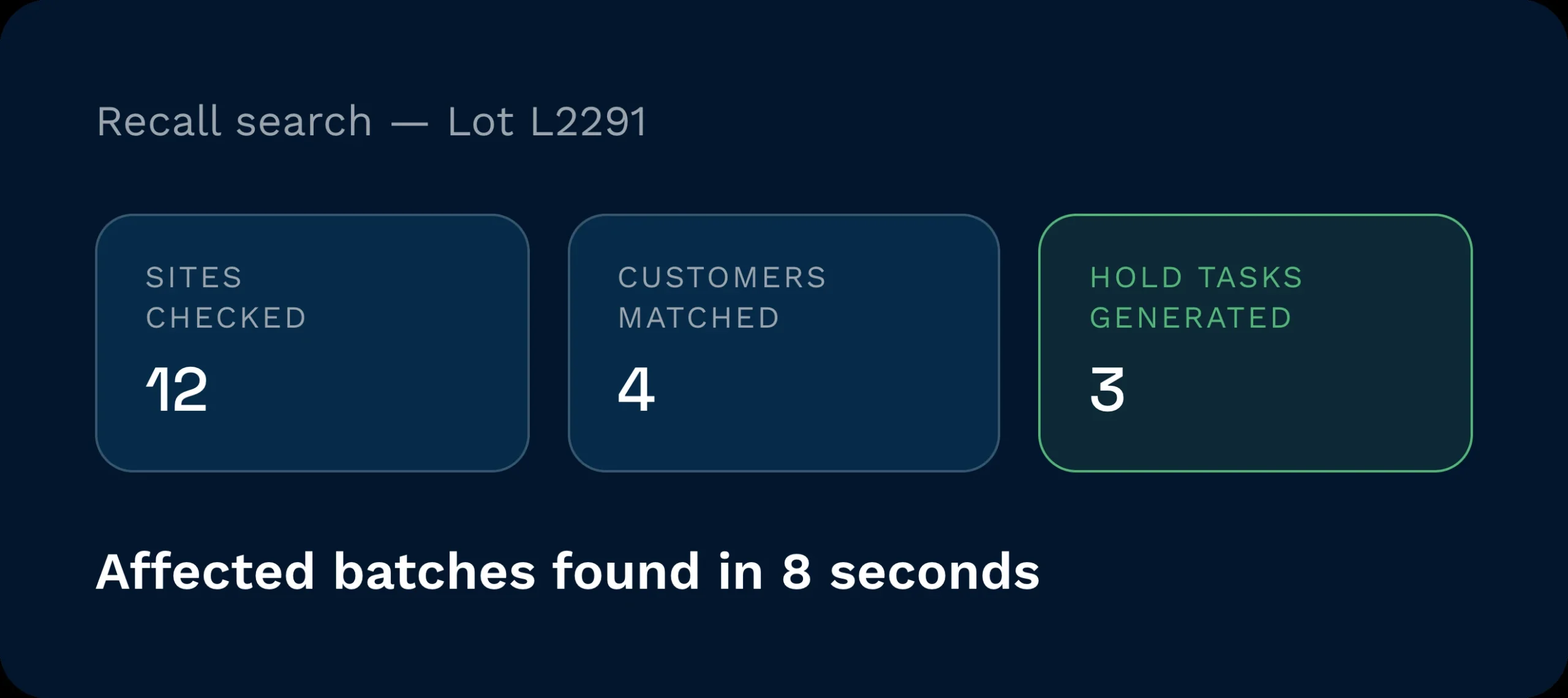
Identify affected batches in seconds. Filter by site, customer, or time window, generate hold tasks, and pull proof of movement for stakeholders. You reduce downtime, cost, and reputational risk.
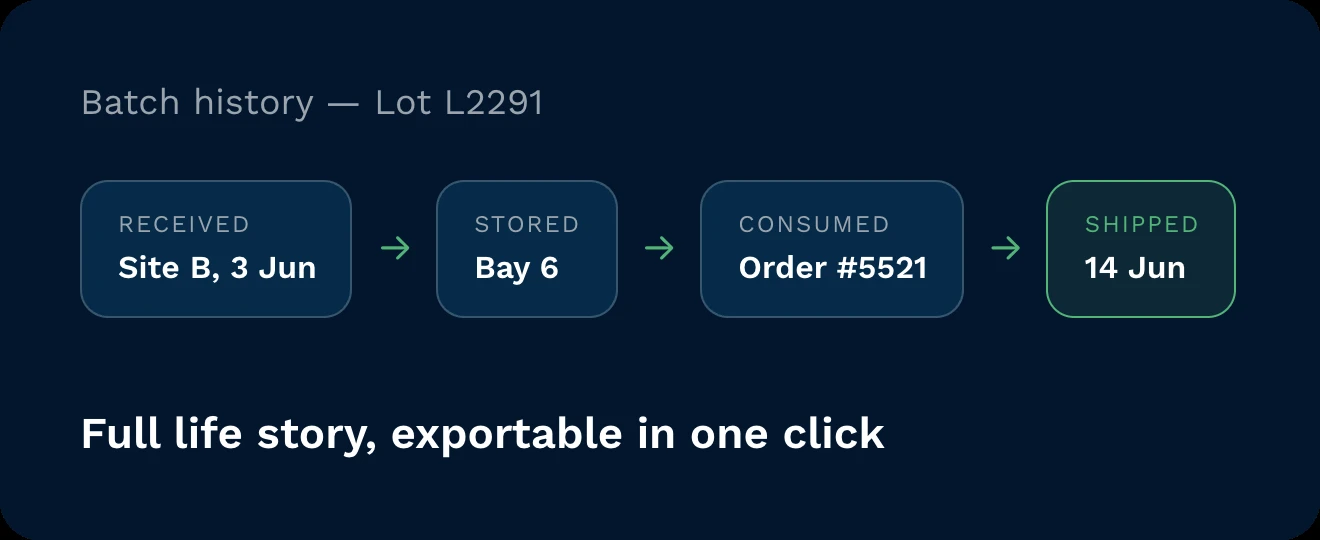
See the full life story of each batch… who received it, where it was stored, which orders consumed it, and when it left. Export the evidence pack to Excel or share a report instantly.
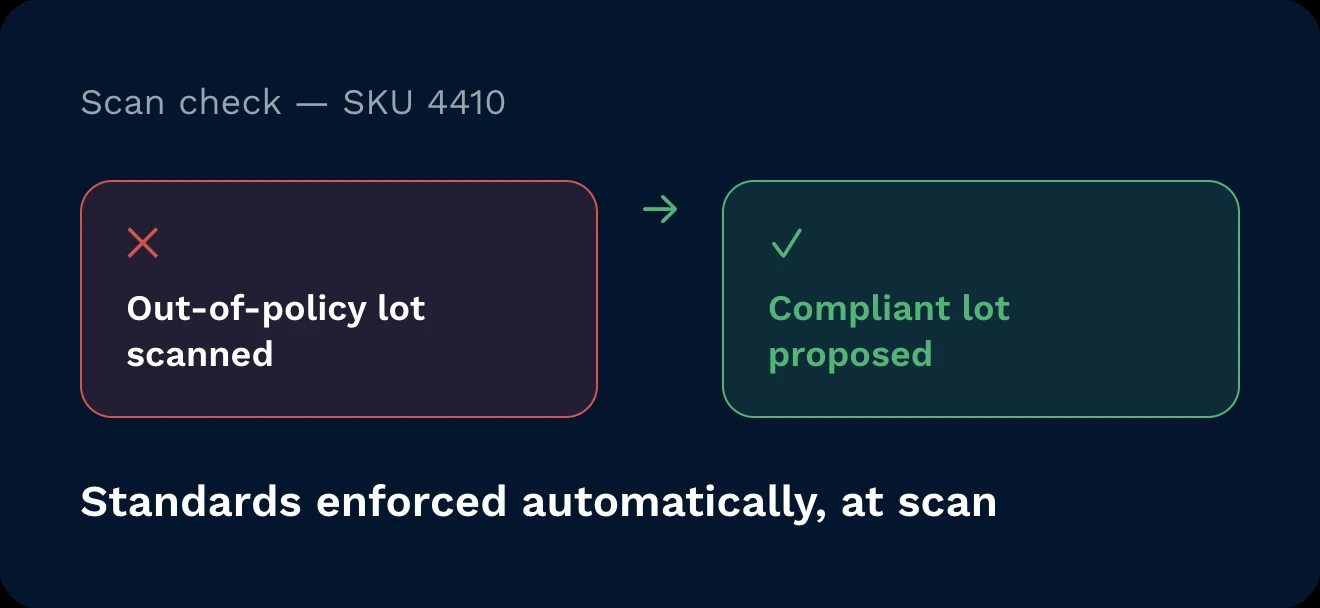
Encode shelf-life, temperature, allergen, or hazard attributes per SKU. Clarus proposes only compliant lots and blocks out-of-policy picks at scan, so standards are enforced by default.
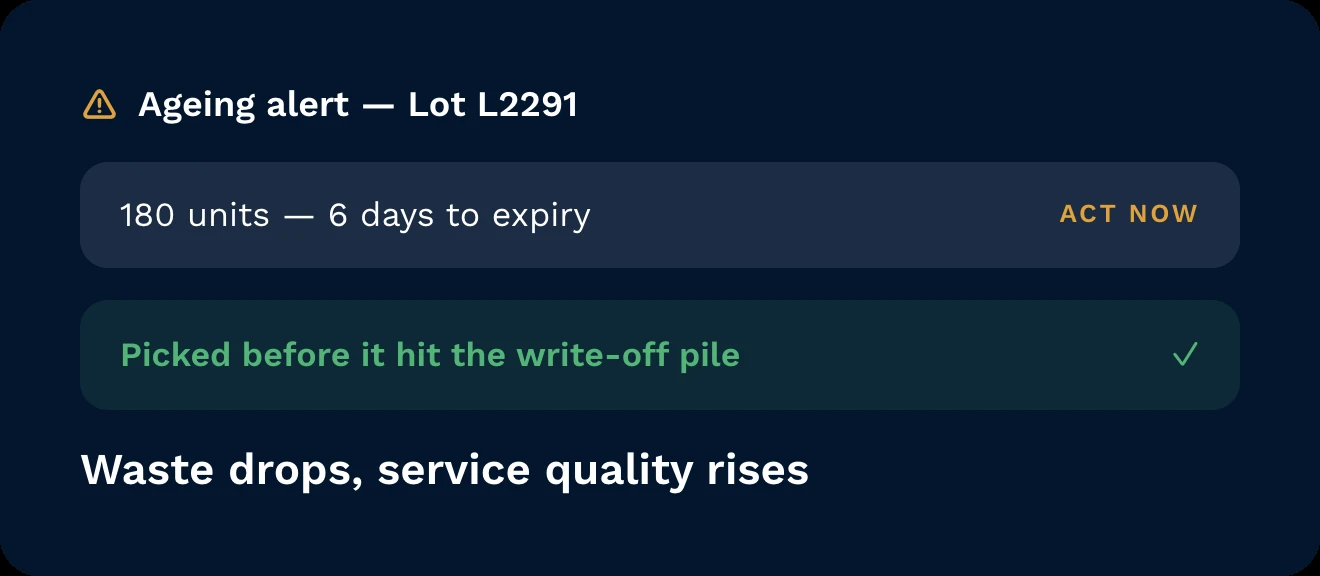
Prioritise the right lots every time with Batch/Lot Control. Ageing views and alerts surface at-risk stock early so teams act before dates hit. Waste drops while service quality rises.
When batch control lives in spreadsheets, risk creeps in. Clarus captures batch and expiry at receipt, enforces FIFO/FEFO in the flow of work, and keeps a clean audit of every movement. Teams pick the right lots first. Quality sees issues earlier. Customers receive compliant product with the paperwork to match. Batch/Lot Control becomes a built-in safety net instead of an end-of-month scramble.

Set the rules and see them followed. Batch/Lot Control turns risk into a governed process. You move from firefighting to predictable outcomes backed by data.

Operators scan, pick the right lot the first time, and keep aisles moving. Exceptions are visible with clear fixes, so cut-offs hold even when volumes spike.

Trace any shipped lot back to receipt. Prove holds, releases, and FEFO application with timestamps and users. Audits become routine rather than a scramble.
Search affected batches by site and date range, place a system hold, and generate removal tasks. Export the movement history and current exposure to share with stakeholders. You move from hours of chasing to minutes of controlled action.
Yes. Set the global rule for each SKU, then override by customer or site where needed. FEFO ensures perishable goods ship in the right order, while FIFO keeps non-perishables flowing fairly.
Every transaction carries user, timestamp, quantity, location, lot, and expiry. You can trace any shipped unit back to receipt and show the decisions made along the way. Reports export to Excel or via API on demand.
It speeds them up. Directed allocation removes debate at the aisle, and scanner checks are quicker than investigating errors later. Replenishment feeds pick faces with the correct lots first, so search time falls.
Raise a quarantine with reason codes, move stock to a hold location, and require approval for release. All actions are captured in the audit trail, so investigations are simple and repeatable.
Yes. Add attributes and constraints (temperature bands, allergen flags, hazard classes) to SKUs and locations. The engine recommends only compliant slots and lots and blocks out-of-policy picks automatically.
Still on the fence? Spend four minutes watching Clarus handle goods‑in, picking and dispatch. You’ll see why our customers keep saying ”yes” to new contracts.