
Min/max replenishment was managed through spreadsheets
Bulk-to-primary top-ups were manual and labour heavy
Pick faces stayed fixed regardless of shifting demand
Short picks and repicks split orders and triggered “where is it” calls
Safe minimums and maximums set per SKU, location or customer, no spreadsheets
Bulk stock moves to primary automatically, grouped by aisle and route
Slot recommendations shift with demand, fast movers move nearer to pack
Faces stay topped up, orders wave once and flow straight through pack
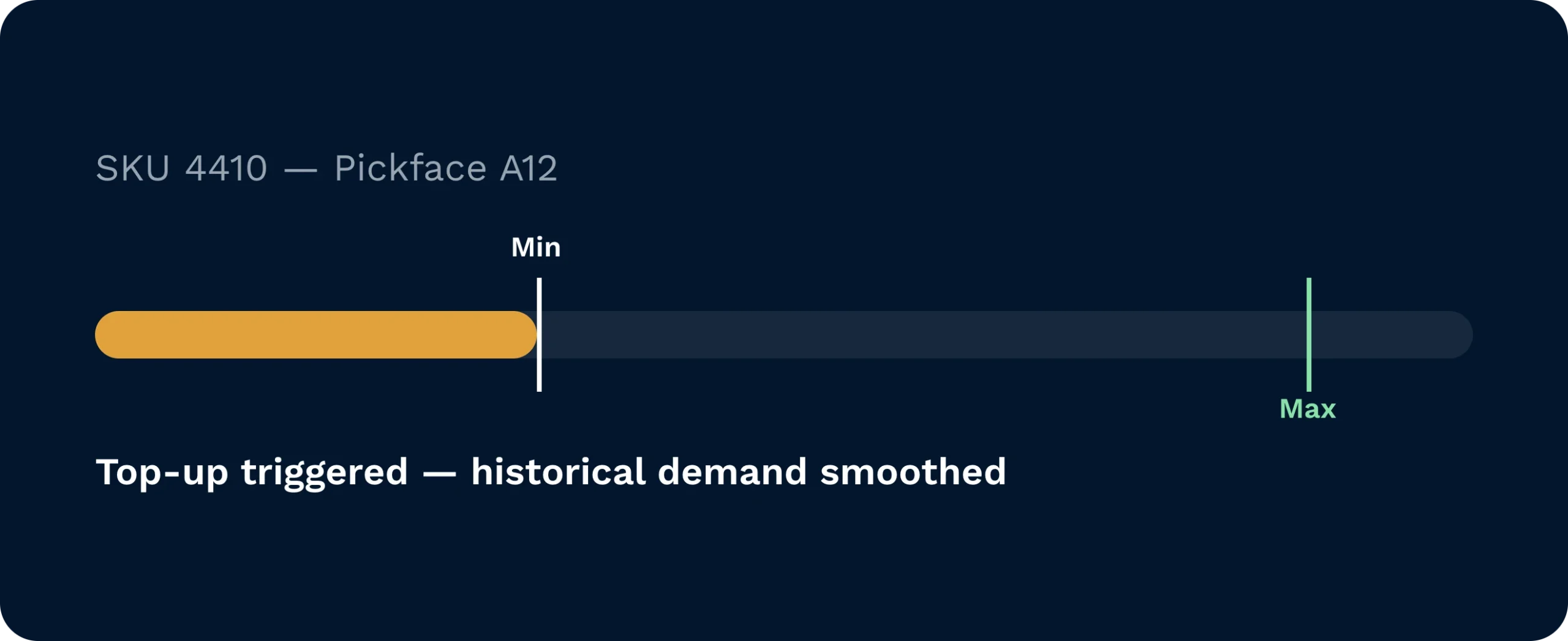
Set safe minimums and efficient maximums per SKU, location, or customer. Clarus monitors on-hand, allocated, and in-transit to trigger top-ups exactly when needed. Historical demand smooths the signal, cutting avoidable rushes and protecting availability.
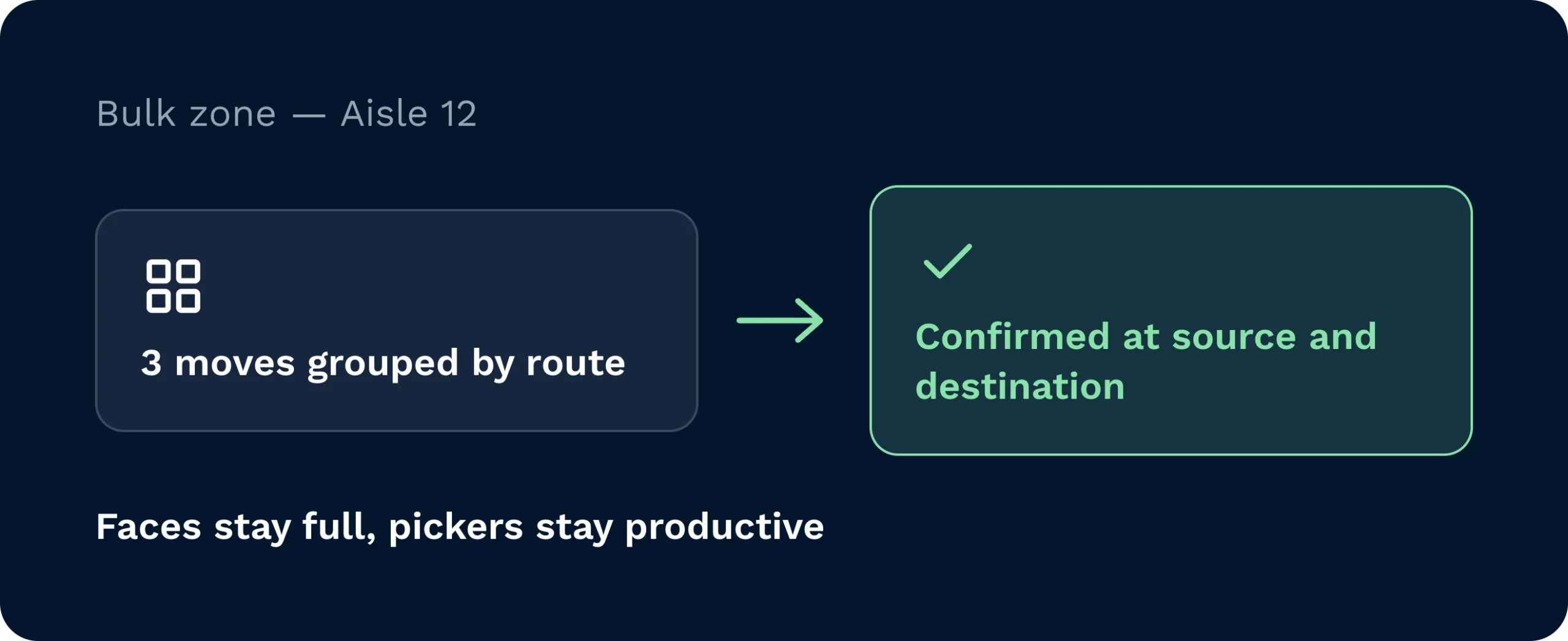
Turn bulk stock into ready-to-pick inventory automatically. The system groups tasks by aisle and route, batches compatible moves, and confirms with scans at source and destination. Labour drops. Accuracy rises. Pickers stay productive because faces are full.
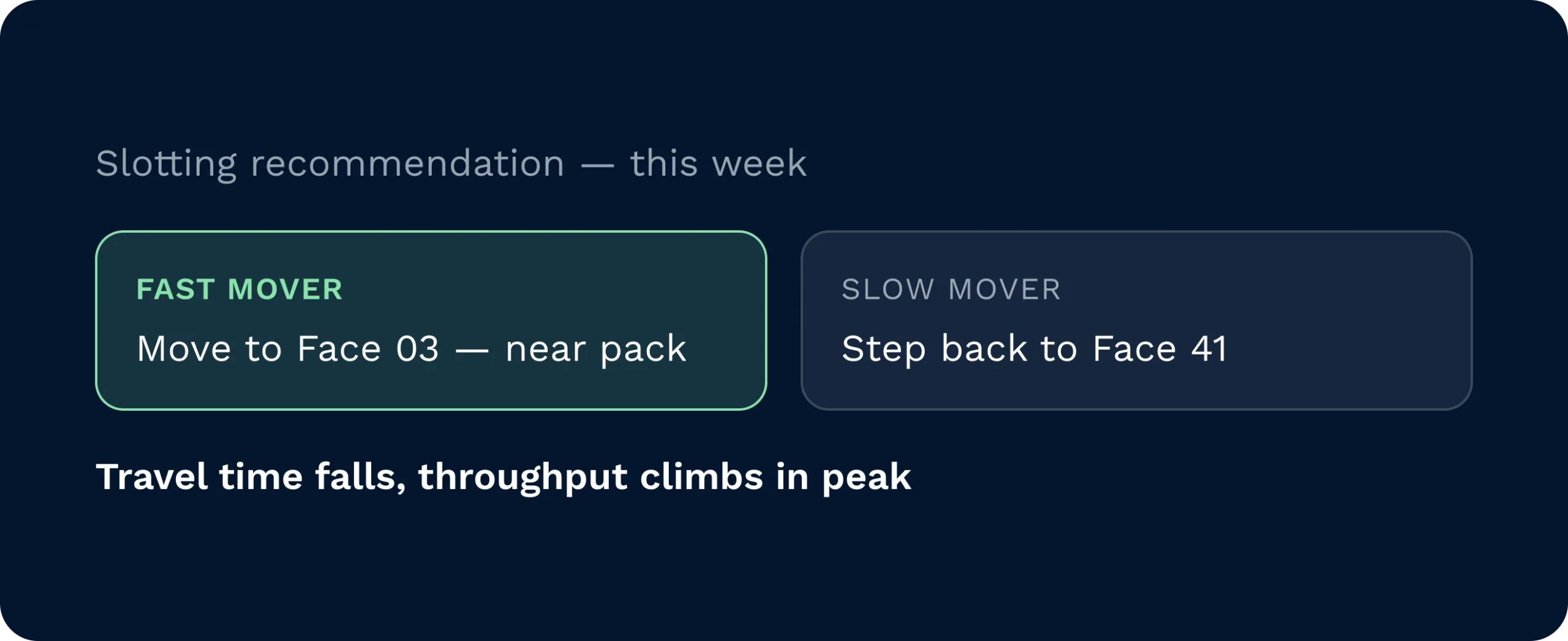
As patterns shift, Clarus recommends slot changes and right-sizes face quantities. Fast movers gain frontage near pack. Slow movers step back. Travel time falls and throughput climbs, especially in peak.
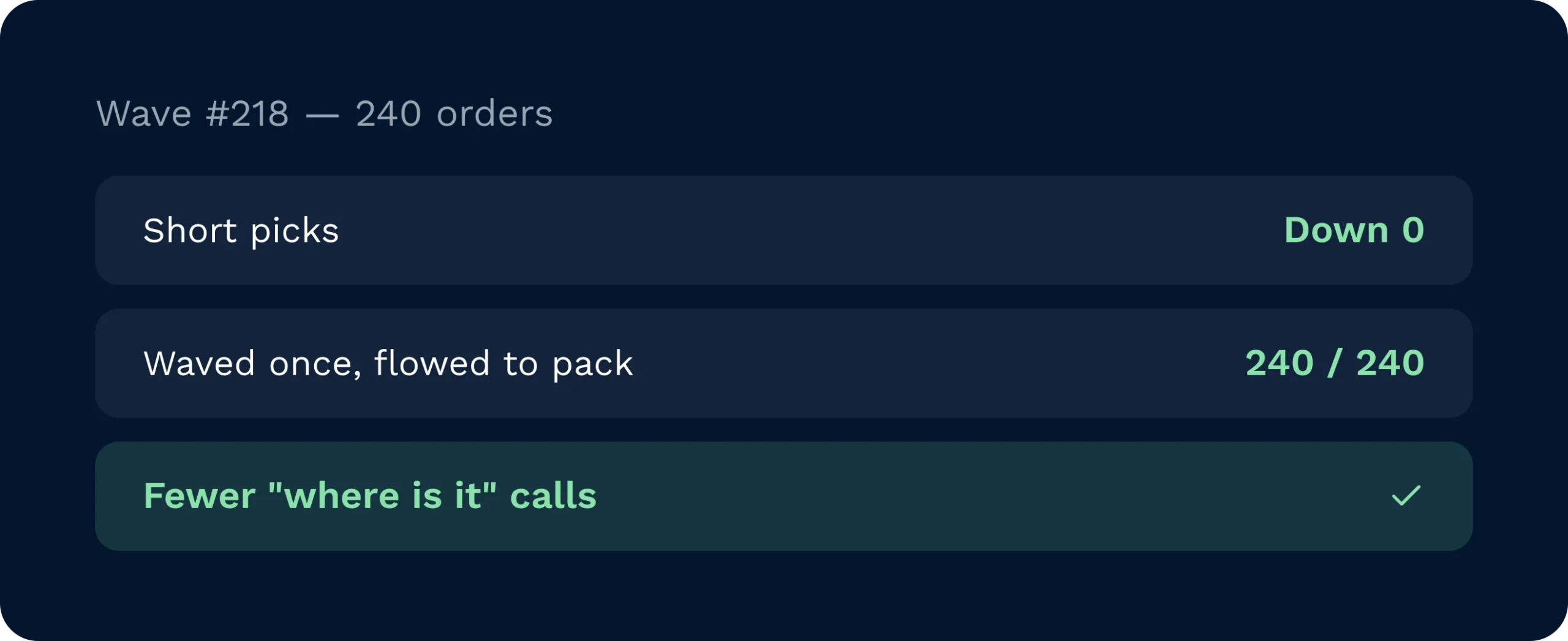
Keeping faces topped up reduces short picks and repicks. Orders wave once and flow through pack without exception. Customer promises stay intact and service teams field fewer “where is it” calls.
Chasing empty pick faces slows everything. Orders pause. Teams scramble. Clarus replaces guesswork with an always-on engine that watches real-time stock and velocity. When levels dip below thresholds, the system raises directed replenishment tasks from bulk to primary. Tasks land on handhelds with clear sources, destinations, and quantities. The result is steadier flow, fewer interruptions, and orders that leave on time.

Design the rules once and scale them. Set min-max by channel, protect critical SKUs, and prioritise tasks against carrier cut-offs. Directed replenishment stabilises cost-to-serve and makes service levels predictable across every site.

See what needs topping up and where. Tasks are grouped by zone and travel path, with scanner-led confirms and exception prompts. Faces stay ready, picks start on time, and the team spends less time firefighting.

Adjust thresholds from real usage, not hunches. Clarus shows velocity, hits to minimums, and exception history so you can lift service while trimming labour and reserve stock.
Clarus plugs into your current tech stack via APIs and EDI, but the replenishment logic runs inside the WMS. Orders and inventory updates trigger tasks automatically. Drivers receive instructions on mobile, and confirmations update stock in real time. There’s no extra middleware required to keep pick faces full.
Yes. Configure min/max by SKU, family, zone, or customer channel. Add safety stock for key accounts. Use conditions to delay non-urgent moves during peak pick windows or to prefer certain bulk bays for faster travel. These rules keep automation precise and predictable.
Replenishment respects FIFO and FEFO as well as lot and serial controls. The task includes the right pallet or case from the right bulk location. Scans at source and destination build a full audit trail for QA and recalls while keeping moves quick and clean.
It’s designed to prevent it. Tasks are sequenced by urgency and travel distance, and you can pause or throttle moves by zone during busy waves. If a route blocks, the system re-queues the job and proposes alternates so picks aren’t disrupted.
You can start with simple min/max in days. Define pick faces, set thresholds, and go live. As you gather performance data, tune face counts, priorities, and demand windows. The basics are easy to set, and the depth is there when you’re ready.
Any operation that breaks down pallets into cases or eaches gains immediately… e-commerce, wholesale, and 3PLs alike. The feature removes manual monitoring, speeds picks, and keeps rotation honest, all while cutting avoidable travel and late-wave drama.
Still on the fence? Spend four minutes watching Clarus handle goods‑in, picking and dispatch. You’ll see why our customers keep saying ”yes” to new contracts.