
Legacy systems acted as closed boxes, trapping data inside
Manual exports and end-of-day reconciliations caused delays
Integrations were brittle, point-to-point, and needed local servers
New site launches meant months of hardware-heavy re-platforming
Every function, stock moves to status changes, is programmatically accessible
Real-time data flows straight to finance and customer service
New ERPs and marketplaces connect in days, not months
New sites scale with zero downtime, one source of truth across locations
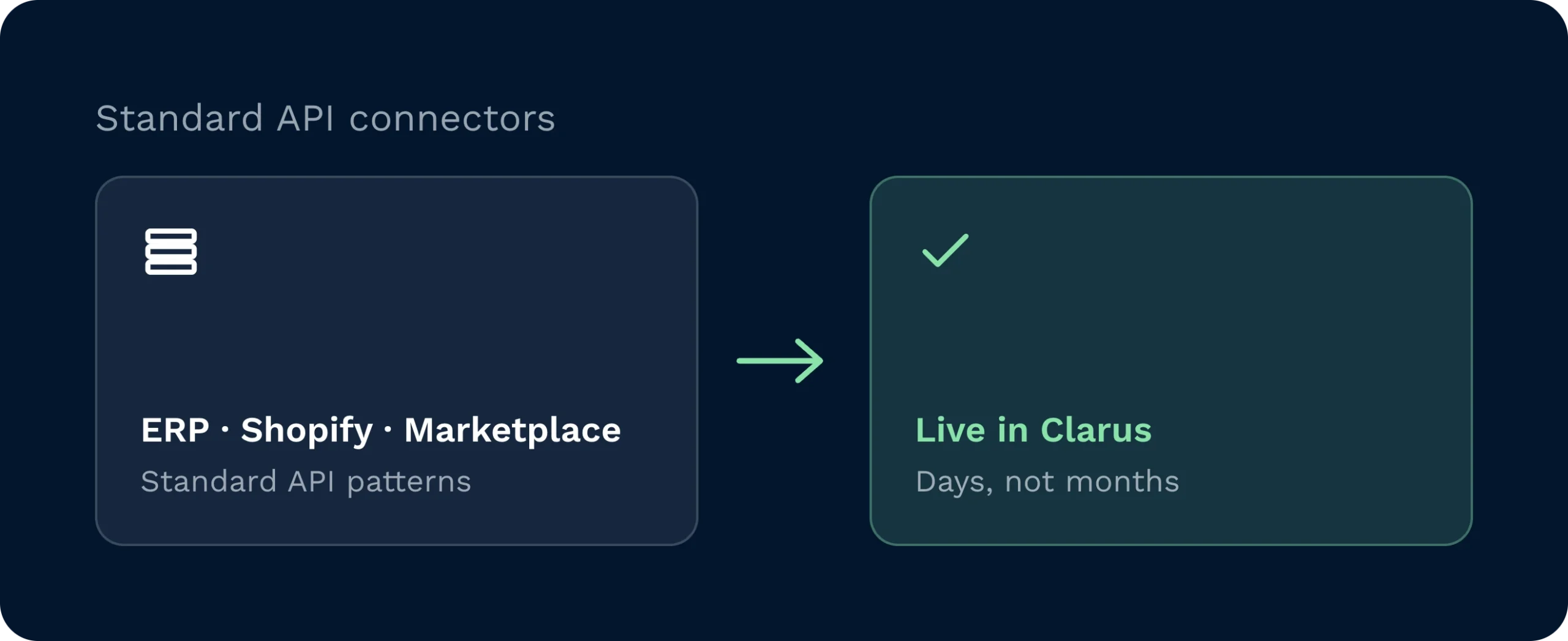
Connect Clarus to any modern ERP, Shopify, or marketplace in days rather than months using standard API patterns.
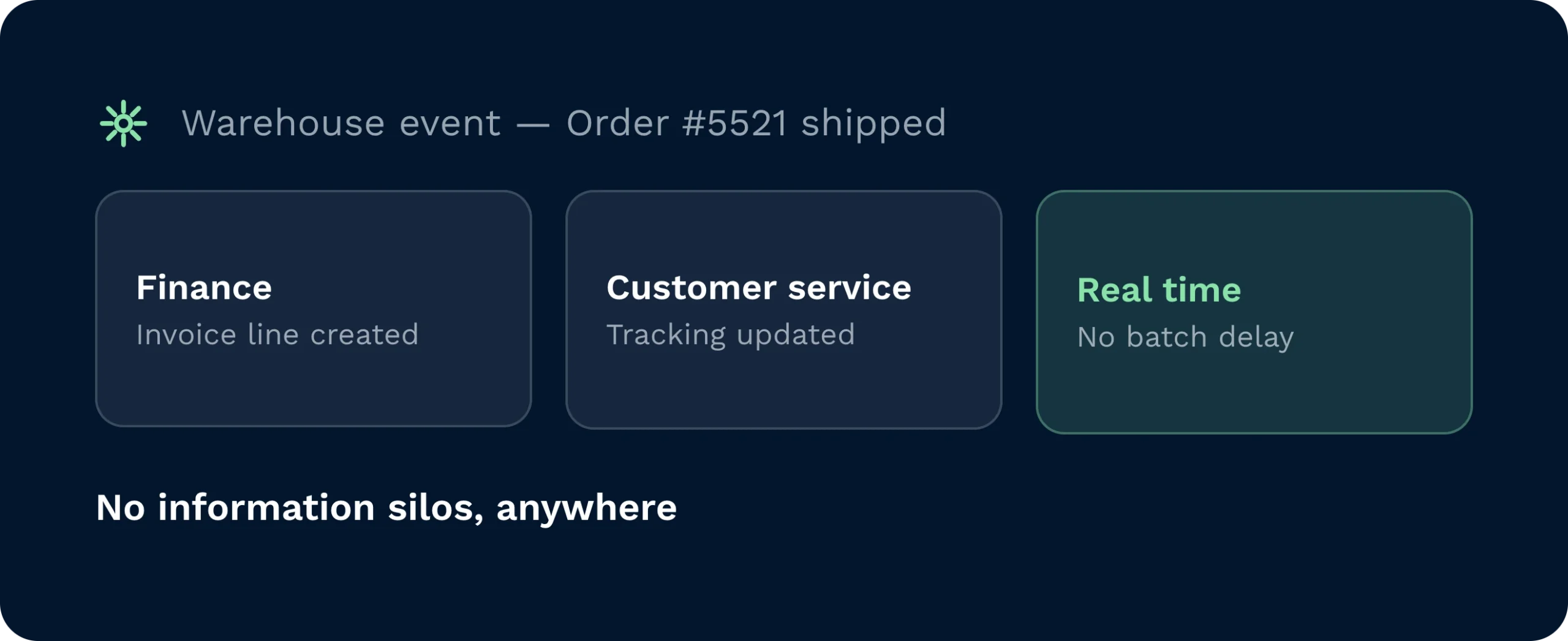
Eliminate information silos by ensuring warehouse events flow back to finance and customer service teams in real time.
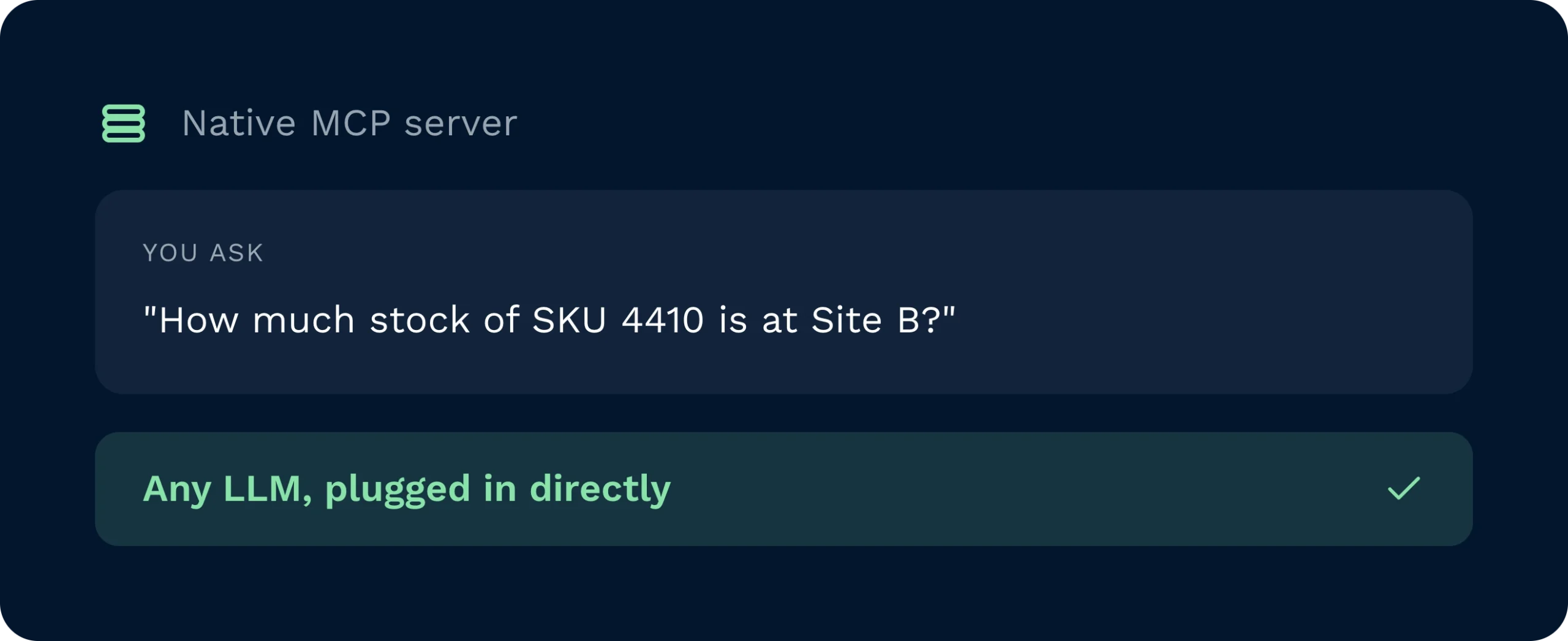
Plug your WMS data directly into LLMs or custom AI assistants via the native MCP server for conversational stock queries.
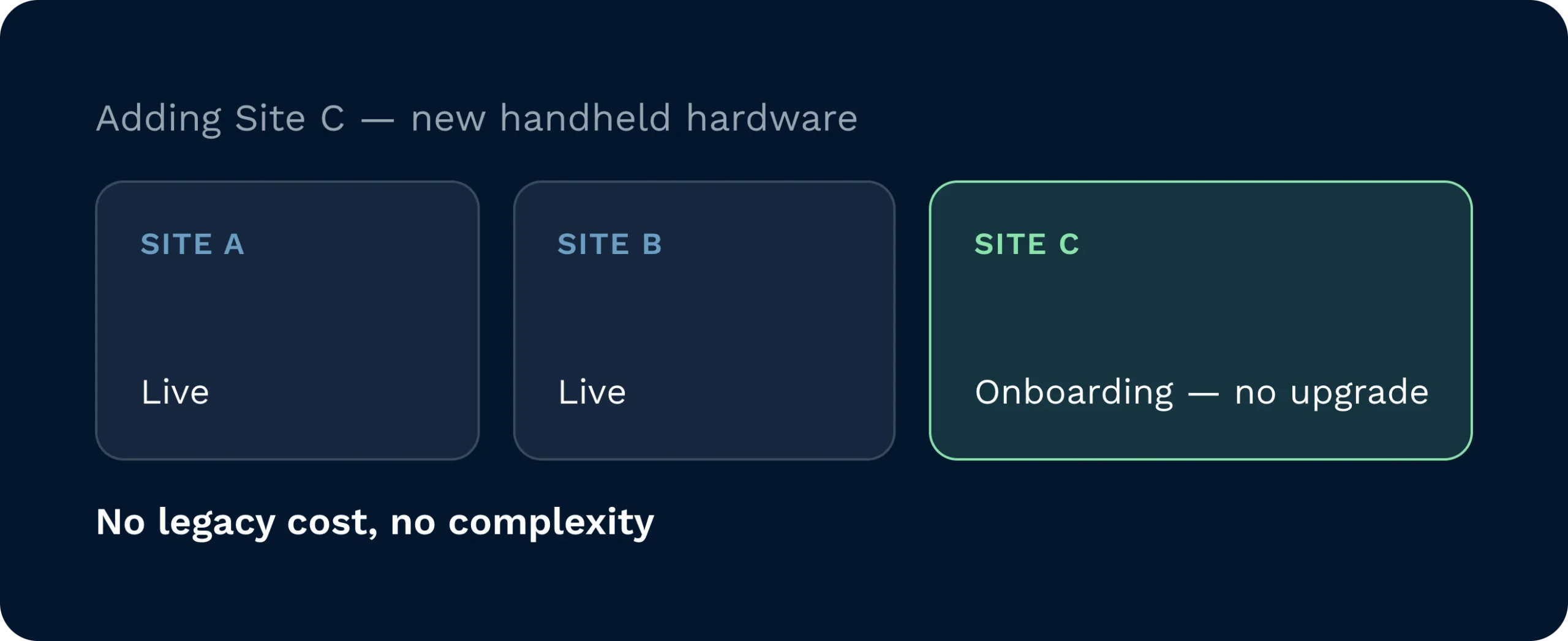
Scale to new sites or adopt new warehouse hardware without the cost and complexity of legacy system upgrades.
In a Clarus environment, the API is not an afterthought; it is the foundation. Whether you are triggering tasks from an ERP, connecting an autonomous robot, or plugging in an AI model, the system responds in real time without the friction of legacy middleware.
Programmatic logic. Every button press and handheld action is available as an API call for custom automation.
Zero-downtime scaling. Deploy new workflows and site configurations without the need for hardware-heavy re-platforming.
Open connectivity. Use REST or GraphQL patterns to move data fluidly between e-commerce, ERP, and transport platforms.

Simplifies the tech stack by removing the need for local servers and brittle point-to-point integrations. The API-first approach ensures the WMS aligns with broader enterprise cloud strategies.

Uses the shared data layer to pull live reports and synchronise stock levels across locations instantly. No more waiting for end-of-day reconciliations or manual data exports.

Leverages the MCP server and open APIs to trigger automated events, such as auto-replenishment based on external demand signals or AI-driven pick prioritisation.
No. While the API-first architecture provides powerful tools for developers, the Clarus front end and handheld workflows are ready to use out of the box. The API layer is there to ensure that when you do want to integrate or automate, the system doesn’t block you. Most users interact with Clarus through our standard, intuitive interface, while the IT team enjoys the ease of background connectivity.
Clarus uses modern, enterprise-grade security protocols. Every API call requires authentication and is subject to the same role-based access controls as the manual interface. Unlike legacy on-premise systems that often rely on vulnerable VPNs for remote access, our cloud-native architecture is built with a “secure by design” philosophy, including regular patching and zero-downtime security updates.
Yes. Even if your ERP is not modern, Clarus can bridge the gap. We support various integration methods, from direct API connectivity to structured file exchanges. The flexibility of our architecture means we can usually find a way to synchronise data, regardless of the age of your existing core systems. [Assumption: Integration depends on the legacy system’s ability to export or receive data in a structured format.]
The Model Context Protocol (MCP) server allows your AI models (like LLMs) to safely interact with your warehouse data. Instead of just “reading” about your warehouse, the AI can query live stock levels or even trigger actions within Clarus. It turns your WMS into an active participant in your AI strategy, providing a secure bridge between your operational data and your intelligent tools.
Significantly. Because Clarus is a shared cloud platform, you can manage multiple warehouses through a single API endpoint. You gain a “single source of truth” across the entire network. This makes site transfers, global inventory views, and standardised reporting much easier to implement than with disconnected, site-specific installations.
Clarus is designed for operational resilience. The handheld workflows and core warehouse functions operate independently of the API integrations. If an external system (like a marketplace) experiences an outage, your warehouse team can still pick, pack, and ship using the Clarus interface. Once the integration is restored, the data synchronisation catches up automatically.
Still on the fence? Spend four minutes watching Clarus handle goods‑in, picking and dispatch. You’ll see why our customers keep saying ”yes” to new contracts.