

St John’s Hall Storage is a third-party warehousing provider in the UK, serving a mix of local and overseas customers with long-term storage, pallet handling and increasingly complex pick and pack operations.
Over more than 30 years, the business has grown from a single warehouse to a multi-site operation. Growth has come mainly through word of mouth from customers who value St John’s “first class” service and the way the team acts as an extension of their operation rather than just another supplier.
As customer expectations have evolved, so has the operational challenge. Many of St John’s customers now operate with shorter lead times and broader product ranges. Goods often arrive one day and need to be picked and despatched within 24–48 hours, with very little room for error.
Internally, the leadership team has always been clear that growth should not come at the expense of culture. St John’s is known for long staff tenure and a close-knit team, with warehouse operatives and office staff who have been with the business for many years. Any technology change needed to support that culture by making work easier and more effective, not by dictating processes without regard for experience on the ground.
For around 25 of those years, the company relied on a legacy, on-premise WMS. It had once been a significant step forward, but by the time St John’s was running multiple warehouses and high-touch 3PL services, the system was ageing and difficult to evolve.

Overcoming WMS Challenges Holding St John’s Back
The legacy WMS had become a limiting factor across technical, operational and commercial dimensions.
Technically, the system was server-based and fragile. Downtime and disruption were real concerns, and upgrades were neither simple nor seamless. As the wider software world shifted decisively towards cloud delivery, St John’s found itself tied to an infrastructure model that could not offer the resilience or flexibility they needed.
Operationally, the pain was most acute around visibility and invoicing. The old system struggled to provide real-time tracking of pallets and stock. Booking in, picking and despatching were slowed by the need to complete entire loads before starting onward movements. With customer lead times shrinking, that sequential model created bottlenecks and constrained the service St John’s wanted to provide.
Invoicing was a particular flashpoint. Under the previous system, data from the WMS had to be re-keyed manually into the accounts software. That process was time-consuming and error-prone, often leading to typos and queries. Managing Director Tim Basey-Fisher personally spent around four days at the end of each month checking invoices to make sure they were correct before sending them to customers.
This manual approach also created a “month end crunch”. Invoices went out monthly, concentrating work into a single, stressful period and delaying visibility of costs for customers. If queries arose, they were often addressed weeks after the underlying activity, when it was harder for either party to recall the details.
The lack of true cloud capability in the incumbent system became increasingly hard to ignore. As the market moved on, the vendor attempted to position what Jenny Green, HR & Operations Manager, describes as a “cloud-based” solution that was essentially the same old system with a cloud dashboard layered on top. When compared with modern, cloud-native WMS products, it was simply not competitive.
Worse, the vendor presented St John’s with a stark choice: pay a substantial amount to move to this limited “cloud” version with a high ongoing subscription, or migrate to a different acquired product that was not fit for their third-party warehousing model. The business was effectively backed into a corner at a time when it was extremely busy and managing important new customer contracts.
Alongside these system issues, the team could see the broader implications. Inefficient walkthroughs across multiple warehouses meant time was lost in picking and put-away. Without system-guided routes, staff relied heavily on local knowledge to work efficiently, which made the operation harder to scale and standardise.
The picture was clear: St John’s had grown through service and reputation, but its WMS was holding it back from the next stage. St John’s was facing rising tension, with the status quo becoming increasingly untenable.
Guiding St John’s Toward WMS Transformation
Recognising the strategic importance of the decision, St John’s undertook a thorough two-year review of the WMS market. The team drew on 25 years of experience with warehouse software and approached the search with a clear view of what did and did not work for their model.
They were looking for a solution that was:
- Genuinely cloud-based and scalable, supporting remote work, multi-site operations and modern device types.
- Designed by people who understood warehousing, with workflows for receiving, storage, batch-sensitive goods and complex pick and pack.
- Accessible from laptops, handheld computers, tablets and smartphones, enabling flexible, real-time interaction with the system.
- Equipped with strong reporting and client portal capabilities, so customers could see live stock and generate their own analysis.
- Backed by a provider with in-house development and a commitment to evolving the product in partnership with customers.
Clarus WMS stood out during this review. Jenny recalls “exhausting the market” with demos that often revealed outdated software behind glossy presentations. In contrast, Clarus presented as a modern, cloud-native platform with strong customer support, cross-platform usage and clear scalability.
A key differentiator was Clarus WMS’s hosting on Amazon Web Services (AWS). For Tim, initially hesitant about moving away from an on-premise server, the fact that Clarus ran on world-leading AWS infrastructure was pivotal.
“As soon as I heard it was hosted on Amazon AWS servers, it gave me more confidence in selecting Clarus as our new WMS product.”
Tim Basey-Fisher, Managing Director
Clarus also offered St John’s a full one-month demo environment with their own data, something other vendors did not provide. The team received a link, access to a dedicated instance, and the freedom to put the system through its paces in real-world scenarios. That willingness to expose the full product, rather than a curated demo, gave St John’s confidence that what they saw was what they would get.
Critically, Clarus positioned itself as a partner rather than a distant software supplier. Jenny highlights how conversations with Clarus felt grounded in warehousing reality: when she described an issue, the team understood both the terminology and the context. The combination of industry experience and technical capability allowed Clarus to guide St John’s towards a solution that respected their existing strengths while addressing long-standing pain points.
Implementing the Solution: From Planning to Execution
The timing of implementation was challenging. St John’s was at a peak in its growth, managing major customer contracts, when the incumbent vendor forced a tight window for change. Jenny notes they had roughly two months’ notice, making the decision to move WMS at that moment both high risk and high opportunity.
Together, St John’s and Clarus WMS designed an implementation approach focused on control and continuity. Data was exported from the legacy system and imported into Clarus, with the ability to run both systems in parallel where needed. This phased migration reduced the risk of a “big bang” cutover and allowed the team to build confidence in the new workflows.
Change management in the warehouse was as important as the technical work. St John’s moved from older handheld scanners to modern Honeywell handheld computers with significantly more functionality. Tim highlights that these new devices made picking easier and enabled more picks per hour than under the previous WMS.
At the same time, Clarus’s warehouse walkthroughs began to guide operatives to the most efficient locations for put-away, picking and transfers. For a large, multi-warehouse site, this system-led routing helped reduce wasted walking time and supported more competitive cost structures.
Front-line staff needed to adapt to more structured processes, and there was natural resistance at first. Some preferred to see every pick in one warehouse rather than the system separating orders for optimal efficiency across multiple warehouses. St John’s leadership made pragmatic compromises where needed, but over time the benefits of system-guided work became clearer.
Office and customer service teams were trained on the Clarus web interface and reporting tools. They learned how to use real-time data to respond to queries, run tailored customer reports and support the transition to more frequent billing cycles. Meanwhile, Clarus’s client portal opened up new ways for customers to interact with their data and submit orders and goods-in information directly.
Throughout the project, Clarus’s live chat support became an important safety net. Jenny describes being able to copy and paste a pick list, outline an issue and receive a response within minutes. This responsiveness extended to St John’s customers, who could also contact Clarus directly with questions about terminology or portal use.
“The customer service of Clarus is really good. You can paste a pick list, explain the problem and they actually respond within minutes.”
Jennifer Green, HR & Operations Manager
Despite the inevitable challenges of any major system change, the joint team implemented Clarus WMS with minimal disruption to day-to-day operations. St John’s actively learned, adapted and refined its own processes to make the most of the new capabilities.
Results Achieved: WMS Success in Action
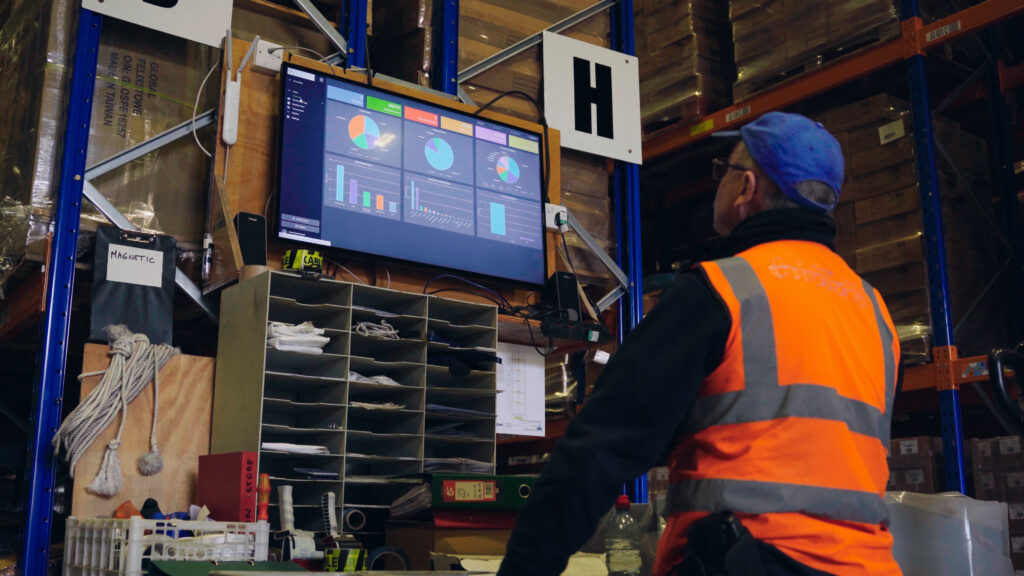
Once Clarus WMS was fully embedded, St John’s began to see tangible benefits across capacity, invoicing, accuracy and customer experience.
1. Scaling capacity without like-for-like headcount
With Clarus automating key workflows and guiding warehouse operatives through efficient walkthroughs, St John’s increased warehouse capacity and throughput without needing to add proportional staff. Tim notes that Clarus is saving the equivalent of about two staff members on site, thanks to more efficient picking and streamlined invoicing processes.
EDI integrations mean that when a vehicle arrives with goods from larger customers, the products are already in Clarus. Operatives simply scan items into location, reducing manual data entry and speeding up goods-in.
2. Transforming invoicing and financial control
The invoicing process has been “improved beyond recognition”. Under the old system, all invoice data was re-keyed from WMS to accounts, leading to errors and forcing Tim to spend four days each month checking invoices before sending them. With Clarus WMS, data is exported directly into the accounts package, dramatically reducing manual effort and improving accuracy.
After the first few months of validating the new process, Tim stopped checking invoices manually because the data from Clarus proved consistently accurate. St John’s now invoices weekly rather than monthly, giving customers fresher visibility of costs and allowing any queries to be resolved quickly rather than weeks later.
“We’re exporting straight from Clarus into our accounts software. We’ve increased turnover and reduced the staff involved with invoicing.”
– Tim Basey-Fisher, Managing Director
3. Improving accuracy, traceability and training
Clarus gives St John’s real-time tracking of pallets. As soon as pallets arrive, they can be booked in and prepared for next-day delivery, rather than waiting for an entire load to be processed. This ability to start picking from the first pallet unloaded is a service level the previous WMS could not support.
The client portal and detailed reporting underpin stronger traceability. Customers can see stock movements live, download reports into Excel, and analyse their own data. When queries arise, St John’s can quickly identify which operative handled a job and walk through the transaction history, using this information for both customer communication and internal training.
4. Elevating customer and partner experience
Customers benefit directly from Clarus’s visibility and automation. They can log into the portal to view incoming and outgoing stock in real time, or they can submit dispatches and receipts via spreadsheets or EDI. St John’s can also schedule automated reports, reducing manual reporting effort and providing consistent information to clients.
“We can now do invoicing on a weekly basis, which customers love, and we can be really transparent if they ever have a query.”
– Jennifer Green, HR & Operations Manager
St John’s has moved from being constrained by an ageing, on-premise system to operating on a cloud-based WMS platform that supports growth, efficiency and service excellence.
Client Reflections and Lessons Learned
Looking back, Jenny describes the WMS transition as both demanding and transformative. One of the clearest lessons is that technology alone does not create improvement. St John’s had to be willing to adapt its own processes, sometimes challenging long-standing habits, to make the best use of Clarus WMS.
The project also reinforced the importance of genuine partnership with a software provider. After years with a vendor whose “cloud” offering did not match its marketing, St John’s appreciated Clarus’s transparency and the sense that the software was built by people who truly understood warehousing.
Customer support has become a recurring theme in how St John’s talks about Clarus. Jenny points to the live chat and the personal familiarity with support staff, to the extent that the team even sent them brownies as a thank you. That human connection sits alongside the technical reliability provided by AWS hosting, which both Jenny and Tim see as a major factor in reducing risk compared with the old on-site server.
Perhaps most importantly, there is a renewed sense of confidence that St John’s now has the WMS foundation it needs for future growth: a platform that can evolve with the business, support additional warehouses and devices, and continue to deliver the level of service that has always set the company apart.
Your Path to WMS Success
St John’s Hall Storage’s journey will feel familiar to many logistics and warehousing leaders. A respected, growing business finds itself constrained by a long-serving, on-premise WMS that cannot keep up with modern expectations or support future plans. Manual invoicing, limited reporting and restricted access channels combine to create risk, hidden costs and missed opportunities.
Their experience with Clarus WMS demonstrates that it is possible to make a decisive change without losing what makes your operation unique. By insisting on a cloud-native, warehouse-focused system, demanding transparency from vendors and engaging deeply in the implementation process, St John’s has achieved:
- Increased capacity without matching headcount.
- A streamlined invoicing process that now runs weekly, with far less manual effort and fewer queries.
- Stronger visibility and control for both customers and internal teams.
If you recognise similar challenges in your own operation, St John’s story offers a practical blueprint. Start by clarifying the level of service you want to deliver and the culture you want to maintain. Then, look for a WMS partner that acts as a guide: one that understands warehousing, is honest about trade-offs and is willing to invest in a long-term relationship.
Discover how Clarus WMS can help your operation achieve similar results: from freeing up staff time and smoothing invoicing to giving your customers the live visibility and reliability they increasingly expect from a modern third-party warehousing partner.