


A Family-led Mission
Edge Transport was founded in 1933 and has operated continuously ever since, growing into a third-generation family business where long-term relationships and service consistency matter as much as operational capability.
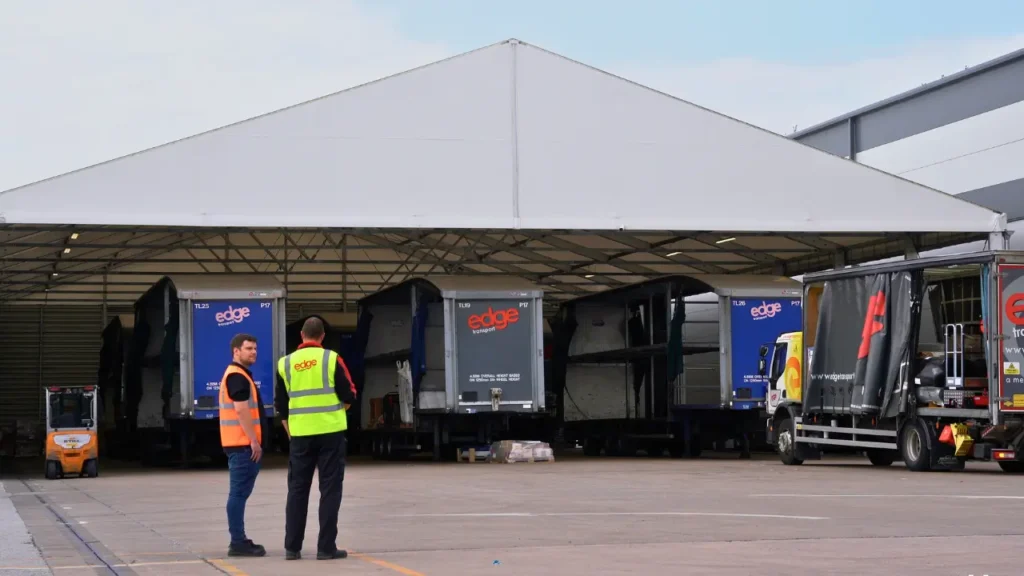
The organisation now runs around 40 HGVs and 80 trailers, delivering a wide range of distribution and warehousing solutions for customers that expect dependable service, clear communication, and rapid response when requirements change.
A defining part of Edge’s market approach is its insistence on viewing operations through the customer’s eyes. Rather than accepting “standard practice” as good enough, the team looks at each customer workflow and asks whether there is a better way to deliver it.
“Edge is different in that we always think of what the customer experience is going to be like, we’ll look at what we’re doing and work out if there’s a better way.”
– Nikki Edge, Operations Director
This culture of improvement is a strength, but it also makes system limitations feel sharper. When the warehouse cannot access stock history quickly, or when it takes too long to answer a customer query with confidence, the experience is felt immediately, both inside the operation and by the customer waiting for an answer.
As Edge expanded its warehousing offer, including customers with strict food handling and traceability expectations, the gap between what the business wanted to deliver and what its legacy tools could support became the start of a transformation journey. Edge was already committed to the mission, but needed better “equipment” to scale it reliably.
Overcoming Warehouse Traceability Challenges
Stock history was unclear
A key pain point in Edge’s previous setup was stock history. The team found it difficult to retrieve clear information quickly, which created friction in routine warehouse activities and slowed down query resolution.
When a system makes it hard to see what has happened to a pallet over time, stock checks become more time-consuming and less certain. It also increases dependency on individuals who know how to navigate the system, rather than enabling any trained user to self-serve accurate answers.
For a business that aims to optimise customer experience, this matters. Customers rarely see the internal complexity, they only experience the lag when an answer cannot be provided quickly, or when a query requires several steps to validate.
Walking replaced visibility
Edge also described the operational cost of not having fast, usable stock information. When teams are not confident in location truth, they compensate by physically searching. That tends to show up as extra walking, longer checks, and slower exception handling, especially during stock takes or when confirming whether a pallet is in the correct location.
This is where warehousing efficiency and customer service overlap. Time spent looking for information, either on screens or on the warehouse floor, is time not spent processing goods-in, executing call-offs, or improving flow through the building.
Customer queries needed evidence
In third-party warehousing, customer trust is built on transparency. When a customer raises a query, the response needs more than a verbal assurance. It needs transactional proof: what was booked in, when it was received, who processed it, where it was put away, and how it moved while in the warehouse’s custody.
Without that proof readily available, even small misunderstandings can take longer to resolve, and customers can be left uncertain about the status of their stock. Edge’s service model, and its family-business reputation, made that an unacceptable long-term risk.
Food compliance increased complexity
Edge also operates with BRCGS accreditation, supporting food-based customers whose stock requirements include best-before dates, batch dates, and demonstrable traceability. Those requirements add complexity, but they also create an opportunity: if the warehouse can capture and act on that data cleanly, it can deliver a superior service while reducing operational noise.
For example, in food warehousing, the system must support picking strategies such as calling off goods by best-before date (shortest date first) and reducing part-pallet sprawl to keep inventory tidy and controllable. These are not optional process details, they directly support compliance expectations and stock integrity.
At this stage of the story, the challenge was clear. Edge needed a WMS that made warehouse traceability easy to access, fast to act on, and strong enough to support both customer experience and accreditation requirements.
Guiding Edge Toward Clarus WMS
Live cloud visibility
Edge adopted Clarus WMS to replace complexity and uncertainty with live information and a clearer operational workflow. A cloud-based system mattered here because it enables live location awareness, reducing the gap between what the system shows and what is physically true in the warehouse at that moment.
This shift supports faster confirmation during stock checks, quicker responses to customer questions, and more efficient day-to-day work because teams are no longer relying on slow stock history searches or manual interpretation to find what they need.
Goods-in became intuitive
From goods-in, Edge highlighted the practical difference Clarus made in booking stock in and booking it away into a physical location. This matters because inbound sets the tone for everything that follows. If goods-in is slow or unclear, the warehouse spends the rest of the day catching up. If it is consistent and fast, the warehouse can plan and execute with confidence.
“Clarus has been massive from the goods in perspective, booking it in, the ease of booking it away into a physical location, it is very intuitive.”
– Chris Graves, Warehouse Manager
Because the workflow is user friendly, Edge can move faster without sacrificing control. It becomes easier to train staff, easier to follow the correct steps, and easier to keep the warehouse operating as a system rather than as a collection of individual workarounds.
Customer transparency improved
Clarus also gave Edge a faster route to transactional visibility. When customers raised queries, the team could access a transactional view that consolidates key facts: booking-in, receipt, putaway, and movement history, including who performed the actions.
That supports transparency, and it also supports continuous improvement. When something does go wrong, the business can identify where it went wrong and how to correct the process, rather than spending time reconstructing events from partial records.
“That transactional screen, you’ve got all the information there, full transparency of every single movement that pallet has had.”
– Chris Graves, Warehouse Manager
Implementing The WMS Solution
Booking-in in minutes
A clear operational indicator of successful adoption is how quickly information becomes usable at the point of need. Edge described a workflow where, once paperwork arrives into the gatehouse, goods can be booked onto the system within two to three minutes.
That time efficiency is not only about speed, it is also about reducing the knock-on effect of inbound delays. When goods are booked in quickly, the warehouse can put away accurately, customers can see updates sooner, and operations leaders can manage the floor based on live truth.
“As soon as the paperwork’s into the gatehouse, we can get them booked onto our system within 2 or 3 minutes.”
– Chris Graves, Warehouse Manager
Faster call-offs execution
Edge also described how Clarus supports a rapid transition from customer request to warehouse action. Call-offs can be processed quickly, with pick sheets outside with the warehouse team within five minutes.
This improves responsiveness, and it also helps Edge process multiple orders efficiently, maintaining service levels during busy periods without creating extra admin drag.
Edge additionally highlighted a workflow that supports export to CSV and import into the transport management system, helping the business maintain a clean handoff between warehouse processing and transport planning using consistent data.
Customer reporting and portal
A meaningful part of the implementation was extending transparency to customers. Edge can set up automated stock reports, including stock movements and transactional histories. Customers can also be given portal access, providing visibility and clarity on what Edge is doing and the status of stock in custody.
This is customer experience improvement made practical: fewer back-and-forth emails, faster self-service answers, and a clearer shared view of inventory reality.
Food workflows and BRCGS
For food-based customers, Clarus supports storing additional attributes such as best-before and batch information. Edge described the ability to call goods off by best-before date (shortest date first) and to use part pallets before full pallets. This helps keep inventory tidy and reduces the operational mess of accumulating multiple half pallets across the warehouse.
Clarus also supports Edge’s traceability expectations under BRCGS, including using transactional information and related documents (such as PODs and delivery notes) to evidence control and movement history when completing traceability reporting.
“Part of BRCGS is we have to do a traceability report to show we’re in full control of everything that comes in, how it’s stored, and when it’s going out.”
– Ryan Jones, Head of Operations
Results Achieved With Clarus WMS
Stock accuracy over 99%
Edge reported a measurable uplift in stock accuracy, reaching over 99%. This is a critical metric because stock accuracy underpins almost everything else: customer confidence, smooth picking, fast query resolution, and a reduction in time lost to rechecks or physical searching.
“When Chris first joined our stock accuracy was nowhere near as high as it is now and with Clarus’ help we’ve managed to get that up into over 99%.”
– Ryan Jones, Head Operations
Faster inbound processing
Edge can book goods onto the system within two to three minutes once paperwork is in the gatehouse. That speed helps the warehouse flow because information is live earlier, putaway can be executed sooner, and customers can receive updates with less delay.
Faster order flow
Edge described getting pick sheets out within five minutes of receiving a customer call-off email. This is a tangible improvement in operational responsiveness, helping the business handle multiple orders efficiently and reduce the time between customer request and warehouse action.
Faster, clearer query handling
With a transactional screen providing movement history, Edge can respond to customer queries faster and with greater certainty. The ability to see when stock was booked in, who booked it in, when it was received, when it was put away, and each movement thereafter supports full transparency.
This transparency also helps the business pinpoint where a process issue may have occurred and apply targeted fixes, rather than relying on guesswork.
Stronger food compliance control
For BRCGS-driven customers, Edge can manage stock using best-before logic and cleaner pallet handling rules (part pallets before full pallets), supporting tidier inventory and more disciplined picking.
The system also supports traceability reporting by making key transactional information and supporting documents easier to access when demonstrating control over inbound, storage, movement, and outbound processes.
Client Reflections And Lessons Learned
Customer experience is operational
Edge’s story reinforces a simple truth: customer experience in logistics is the by-product of operational clarity. When the warehouse can access live pallet location, view movement history instantly, and prove compliance with traceability evidence, the customer’s experience becomes smoother by default.
Usability drives adoption
The fact that Edge repeatedly described the system as intuitive and easy to use is important. A WMS only delivers value when teams use it consistently and correctly. A user-friendly system reduces training friction and increases the chance that processes become standardised across shifts and roles.
Transparency reduces friction
Full pallet movement transparency changes the emotional tone of problem solving. Instead of searching, debating, or reconstructing events, the team can investigate quickly, identify the point of failure, and correct it. That supports both service stability and continuous improvement.
Your Path To WMS Success
Edge Transport’s transformation shows what happens when a customer-first logistics business pairs strong values with modern warehouse systems. By adopting Clarus WMS, Edge strengthened live visibility, improved warehouse traceability, and delivered measurable stock accuracy performance, including over 99% accuracy.
The same approach applies if your operation is dealing with unclear stock history, slow query responses, or increasing compliance requirements. A WMS that delivers live transactional visibility, fast goods-in, and structured picking logic can turn daily friction into consistent service performance.
Discover how Clarus WMS can help your warehouse achieve stronger traceability, faster execution, and the transparent customer experience your operation is aiming to deliver.