

Effective logistics management is crucial for coordinating transportation, warehousing, and inventory to achieve seamless distribution and fulfilment. Warehouse and 3PL professionals often face hurdles such as fragmented visibility, inefficient forecasting, and rising costs in returns processing, which can erode service levels and resilience. At Clarus WMS, we offer integrated solutions that enhance tracking and automation, delivering quick gains in optimisation and sustainability.
Traditionally, overhauling logistics management required months of manual reconfiguration and substantial investments in disparate systems for procurement and packaging. In practice, industry sources note that many WMS programmes run four to twelve months, although simpler cloud deployments can be live in eight to twelve weeks (Aptean, “5 phases of a WMS implementation”; Davanti WICS, “Typical WMS implementation timeline”). With our Clarus WMS approach, we enable rapid deployment of a unified platform, streamlining order to cash fulfilment and just in time delivery in weeks, while bolstering compliance and efficiency.
The result of traditional methods:
- Delays in distribution due to poor supply chain visibility and fragmented transportation
- Inefficiencies in inventory management leading to excess stock and forecasting errors
- Lost revenue from non optimised last mile delivery and compliance failures
What is Logistics Management?
Logistics management encompasses the planning, implementation, and control of efficient movement and storage of goods, services, and information from origin to consumption, integrating transportation, warehousing, and inventory. It focuses on optimisation to meet customer requirements while minimising costs in fulfilment and distribution. In 3PL contexts handling diverse procurement needs, effective logistics ensures resilience against disruptions through robust forecasting and tracking.
Independent research reinforces this need for resilience, highlighting investment in buffers, dual sourcing, and technology to improve flexibility and responsiveness (McKinsey, “Tech and regionalization bolster supply chains, but complacency looms”).
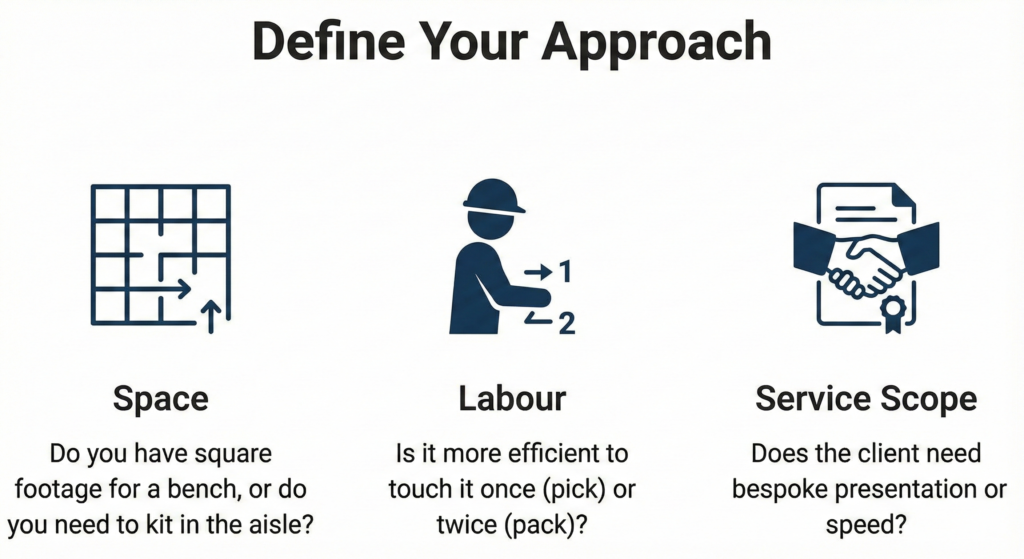
Expert Insight: Integrating logistics with automation tools enables value added services such as kitting. Kitting can be executed either in a dedicated co pack area as a value added service or via assemble on pick when volumes and space favour doing it during the pick task. The approach should reflect space, labour, and service scope for each client.
How to Optimise Warehousing and Transportation?
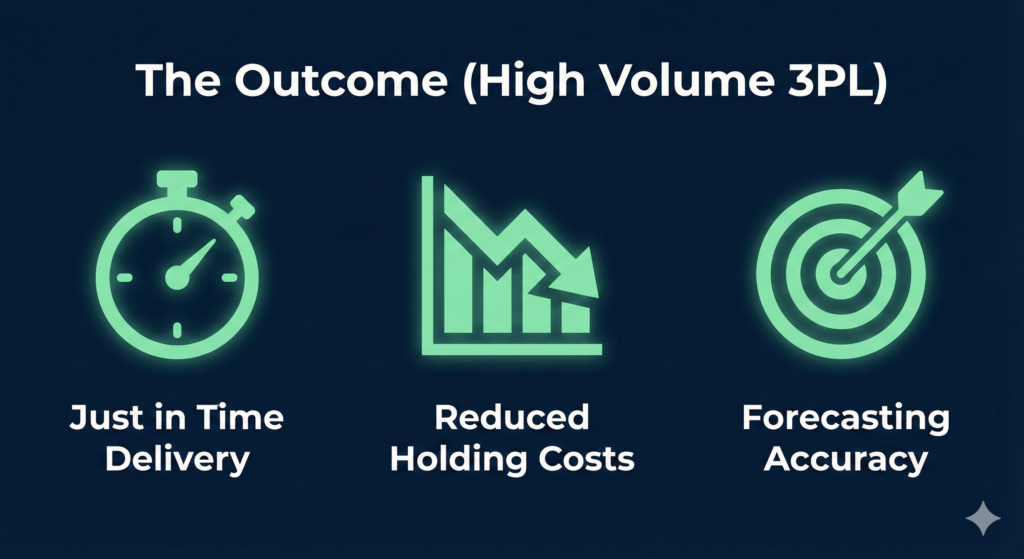
Optimising warehousing and transportation involves synchronising inventory management with a transportation management system (TMS) for seamless inbound and outbound logistics. Start by analysing cost to serve to identify inefficiencies in distribution, then implement automation for real time visibility. In high volume 3PL operations, this integration supports just in time delivery, reducing holding costs and enhancing forecasting accuracy.
From an integration standpoint, ensure critical data fields align across systems, for example order identifiers, priority, departure times, and load references. Oracle’s integration guidance warns against long synchronous chains and recommends publish or subscribe patterns to avoid timeouts and rework (Oracle, “Common integration style pitfalls and design best practices”). SAP describes standard TM–EWM integration scenarios for end to end Deliver processes that can be mirrored with third party WMS and TMS via APIs or EDI (SAP Community, “Integration scenarios with SAP S/4HANA Transportation Management”).
Practical tip from the floor: use TMS feedback to drive pick release order so the first loads to depart are picked first, reducing dwell and missed cut offs.
What Are Benefits of Integrated Logistics Systems?
Integrated logistics systems provide end to end visibility, streamline procurement to fulfilment, and reduce errors in returns processing. Embedding AI in distribution operations is associated with 5 to 20 percent reductions in logistics costs and 20 to 30 percent reductions in inventory in relevant contexts (McKinsey, “Harnessing the power of AI in distribution operations”). In parallel, the 2025 Third Party Logistics Study reports that more shippers are outsourcing to 3PLs specifically for greater business and technology value, including visibility and advanced analytics (NTT DATA, “2025 Third?Party Logistics Study”).
These trends underline why integrated platforms that combine WMS, TMS, and supplier data can strengthen compliance and resilience while controlling cost to serve.
How to Improve Last Mile Delivery Efficiency?
Improving last mile delivery efficiency requires route optimisation with TMS, real time tracking for better visibility, and packaging automation that reduces cube and empty space. City level interventions, including parcel lockers, delivery time window management, and consolidated micro hubs, can reduce emissions and congestion by up to 30 percent and delivery cost by up to 25 percent compared with a do nothing baseline (World Economic Forum, “The future of the last?mile ecosystem”).
For packaging, aligning item to box fit and minimising void fill deliver sustainability gains and fewer failed deliveries, complementing operational improvements in routing and consolidation. See UK guidance on packaging design to minimise environmental impact (WRAP via RECOUP, “Design tips for recycling”).
Traditional Methods vs. Clarus WMS for Logistics Management
Traditional methods often silo warehousing from transportation, leading to inefficiencies in inventory and fulfilment that inflate costs. These approaches lack integrated visibility, causing delays in reverse logistics and poor forecasting. In contrast, Clarus WMS offers a unified platform for optimisation, enhancing distribution and compliance. Where legacy systems struggle with last mile challenges due to manual processes, our solution automates tracking and supports data capture that management can validate on the floor, not only on screens.
End to end visibility should be evidenced with transaction histories and standards based identifiers, for example lot or batch, SSCC pallet IDs, user timestamps, and movement reason codes. GS1’s Logistic Label and SSCC guidance provides the backbone for this traceability (GS1, “GS1 Logistic Label Guideline”). WERC’s DC Measures report outlines the balanced set of warehouse KPIs frequently used to monitor performance and perfect order elements (WERC, “DC Measures overview”).
Why Teams Struggle with Logistics Management
Teams in warehousing and 3PL often struggle with logistics management due to disconnected systems that hinder visibility and optimisation.
- Limited integration between TMS and WMS, causing delays in transportation and inventory syncing
- Manual forecasting processes, increasing errors in demand planning and fulfilment
- Poor handling of returns, risking compliance and cost escalations in reverse logistics
- Inadequate automation for last mile delivery, reducing efficiency and sustainability
How Does WMS Handle Logistics Management?
At Clarus WMS, we handle logistics management through a comprehensive cloud platform that ensures seamless visibility and optimisation across transportation and warehousing. Our approach combines automation with real time data to support compliance and resilience in distribution.
Kitting and value added services: Clarus supports parent–child product conversions, scheduled co pack tasks, and assemble on pick for low volume needs.
Expert Insight: “You can run co pack in a dedicated area with tasks to convert materials into a new SKU, or assemble on pick when space and volumes favour building kits during the pick,”
Real Time Monitoring
Real time monitoring provides tracking across inbound and outbound logistics and supports exception management. However, avoid over reliance on a single visibility signal. GNSS jamming or spoofing can degrade location accuracy in road transport, so pair system alerts with floor checks and multi source corroboration (EUSPA, “EO and GNSS Market Report 2024”; NIST, “Cybersecurity Supply Chain Risk Management Fact Sheet”).
Scalable Adaptation
Scalable adaptation allows the system to grow with operations, handling increased procurement seamlessly. For regulated sectors, configure receipt and dispatch checks to align with standards such as BRCGS Storage and Distribution Issue 4 and EU Good Distribution Practice for medicines (BRCGS, “Storage and Distribution Standard”; EUR?Lex, “EU Guidelines on Good Distribution Practice (2013/C 343/01)”).
Full Visibility
Full visibility requires transaction level traceability. Use SSCC pallet IDs and aligned ASN data for in and outbound events, and monitor KPIs that link warehouse execution to customer outcomes, for example perfect order and on time in full. GS1’s logistic label guidance defines the core data on each logistics unit (GS1, “GS1 Logistic Label Guideline”). APQC provides definitions for OTIF and cycle time measures that 3PLs commonly track (APQC, “Percentage of orders delivered complete and on time (OTIF)”; APQC, “Pick?to?ship cycle time in hours, customer?facing”).
Ready to See It in Action?
Implementing integrated logistics management with Clarus WMS can elevate your operations, enhancing visibility and reducing costs effectively. Envision seamless optimisation that aligns transportation with warehousing without the usual hurdles. Contact Clarus WMS for a demo to explore these benefits firsthand.
References
- “Digital logistics: Technology race gathers momentum,” McKinsey, 16 Nov 2023
- “Tech and regionalization bolster supply chains, but complacency looms,” McKinsey
- “Harnessing the power of AI in distribution operations,” McKinsey
- “The future of the last mile ecosystem,” World Economic Forum
- “Typical WMS implementation timeline,” Davanti WICS
- “5 phases of a WMS implementation,” Aptean
- “Common integration style pitfalls and design best practices,” Oracle
- “Integration scenarios with SAP S/4HANA Transportation Management,” SAP Community
- “GS1 Logistic Label Guideline,” GS1
- “DC Measures overview,” WERC
- APQC “Percentage of orders delivered complete and on time (OTIF)”
- APQC “Pick to ship cycle time in hours”
- “Storage and Distribution Standard,” BRCGS
- EU Guidelines on Good Distribution Practice (2013/C 343/01), EUR Lex
- WRAP, “Design tips for recycling”
- 2025 Third Party Logistics Study overview, NTT DATA
- DHL, “Delivery and Returns Report”
- EUSPA, EO and GNSS Market Report 2024
- NIST, Cybersecurity Supply Chain Risk Management Fact Sheet